Showing posts sorted by relevance for query carlyle group taxes. Sort by date Show all posts

Friday, February 17, 2012

Carlyle Group: C3IPO


Valentine's Day found the SEC posting The Carlyle Group's latest IPO filing.  It's the third amended version and second in 2012.

Because The Carlyle Group L.P. will be a holding partnership and will have no material assets other than its ownership of partnership units in Carlyle Holdings held through wholly-owned subsidiaries, we will fund distributions by The Carlyle Group L.P., if any, in three steps:

First, we will cause Carlyle Holdings to make distributions to its partners, including The Carlyle Group L.P.’s wholly-owned subsidiaries. If Carlyle Holdings makes such distributions, the limited partners of Carlyle Holdings will be entitled to receive equivalent distributions pro rata based on their partnership interests in Carlyle Holdings;

Second, we will cause The Carlyle Group L.P.’s wholly-owned subsidiaries to distribute to The Carlyle Group L.P. their share of such distributions, net of taxes and amounts payable under the tax receivable agreement by such wholly-owned subsidiaries; and

Third, The Carlyle Group L.P. will distribute its net share of such distributions to our common unitholders on a pro rata basis.
It's partners first, shareholders last:

In addition, the partnership agreements of the Carlyle Holdings partnerships will provide for cash distributions, which we refer to as “tax distributions,” to the partners of such partnerships if the wholly-owned subsidiaries of The Carlyle Group L.P. which are the general partners of the Carlyle Holdings partnerships determine that the taxable income of the relevant partnership will give rise to taxable income for its partners. Generally, these tax distributions will be computed based on our estimate of the net taxable income of the relevant partnership allocable to a partner multiplied by an assumed tax rate equal to the highest effective marginal combined U.S. federal, state and local income tax rate prescribed for an individual or corporate resident in New York, New York (taking into account the non-deductibility of certain expenses and the character of our income). The Carlyle Holdings partnerships will make tax distributions only to the extent distributions from such partnerships for the relevant year were otherwise insufficient to cover such tax liabilities. The Carlyle Group L.P. is not required to distribute to its common unitholders any of the cash that its wholly-owned subsidiaries may receive as a result of tax distributions by the Carlyle Holdings partnerships.
The IPO is rigged in the DBD's favor.  Carlyle's co-founders control compensation, scoffing at the notion of a board level compensation committee.

Our historical cash distributions include compensatory payments to our senior Carlyle professionals, which we have historically accounted for as distributions from equity rather than as employee compensation, and also include distributions in respect of co-investments made by the owners of the Parent Entities indirectly through the Parent Entities. Distributions related to co-investments are allocable solely to the individuals that funded those co-investments and would not be distributable to our common unitholders. Additionally, the 2010 Mubadala investment was a non-recurring transaction that resulted in a distribution to the existing owners of the Parent Entities in 2010.

The IPO is but Carlyle's latest cash-in. Stockholders are to help the DBD's montetize, nothing more.  Consider the owners as Han Solo under the C3IPO filing:

C3IPO: Sir, If I may venture an opinion...
Han Solo: I'm not really interested in your opinion C3IPO

It's symbolic they call them Units and Unit Holders  Bring on the investment drones..

Sunday, September 25, 2011

Carlyle Group's Conway: Wants Jobs for the Poor

Carlyle Group co-founder and billionaire William (Bill) Conway wants to give his fortune away, a la Peter Peterson, Blackstone's co-founder.  Peterson gave $1 billion away to a foundation concerned about taxes, especially taxes on the super wealthy.  While Bill Conway hates taxes himself, he sees his foundation supporting a more noble goal.  WaPo reported:

“So much of what I do now is stopgap. Somebody’s hungry; we give money to the food bank,” Conway said in an interview in his Pennsylvania Avenue office. Although such help is necessary and worthwhile, he said, “It would be far better if we had a more permanent solution.”

Conway is intrigued by a recent suggestion from his wife, Joanne, to use his wealth to create large numbers of productive, self-sustaining jobs for the poor.

“More effective than giving away half my fortune before I die is finding a way to help people have a good-paying job,” he said. That would help not only the newly employed, but also their families and the rest of the community.

“If I’m going to create 1,000 jobs, or 10,000 jobs, or whatever the number is, wouldn’t we all be better off?” With jobs, he said, people “have a home; they go out to eat; they have a life.”

The Carlyle Group, a private equity underwriter with $153 billion under management, has owned more than 400 portfolio companies.   Conway had thousands of opportunities to give people, good paying jobs.  How did he do?

Take two Carlyle affiliates, automotive parts maker UCI and Vought Aircraft Industries, maker of aircraft aerostructures.  Under Carlyle's ownership, jobs at UCI fell from 6,900 to 4,350.  Between management fees and special dividends Carlyle siphoned nearly $50 million from UCI from 2003 to 2010.  As The Carlyle Group is currently bidding on TI Automotive, TI workers might want to explore Carlyle's UCI story.

Vought Aircraft Industries took $35 million from Texas taxpayers to add 3,000 new jobs in the Dallas area.  Governor Rick Perry's Texas Enterprise Fund gave Vought a $35 million check in 2004.  By 2010, Carlyle's Vought hadn't added a job.  Instead it cut 35 positions, meaning Perry gave Vought $1 million per job eliminated.  Perry renegotiated the deal in secret as Carlyle struck a deal with Triumph for Vought.  Neither Conway, nor his co-founders, made Texas taxpayers whole.


Carlyle's recent British deals point to future elderly needing assistance.  Carlyle acquired RAC and Brintons, while offloading both company's pension funds.  The move cuts worker pensions by one third.  

A former business news reporter, from a major media company, noted Carlyle's impact:

I have seen so many people -- particularly those in their 50s - 70s -- taken apart by what has happened in their industry as greed has hollowed out the economy. These are people took pride in their jobs and held themselves to this invisible standard that we all just took for granted, but is being wiped out.

WaPo's Conway piece even stated:

Needs are growing because of the slow economy. Government safety nets are shrinking because of tight budgets.  

Recall how much Conway hates paying taxes?  The wealthy's unwillingness to pay higher tax rates is a factor in tight budgets.


Conway's opportunity to grow jobs is every minute of every day. Count how many stay in a Carlyle company's country of origin and how many go to China.  There will be ghosts and angels in William Conway's future.  How will he account for his time racing his peers to the top of the billionaire list?

Update: A comment from justme39 on WaPo's article stated, "Most people aren't looking for a handout. Just a good job. Until recently I had one. Then the Carlyle Group bought my company as an 'investment'. I was laid off this past Monday after 8 years..... .  Perhaps Bill Conway as a co-founder should help his own employees first."

Update 4-14-14:  Carlyle co-founder David Rubenstein was on CNBC today pushing Carlyle's operating executives who grow jobs.  Mary Petrovich said she grew jobs from 500 to 1,000 while at one Carlyle affiliate.  She also drove "global sourcing to achieve material cost reductions," which resulted in how many U.S. jobs lost from 2005 to 2008, Carlyle's ownership period of AxleTech?

Update 1-31-22:  PND reported "Conway originally had planned to donate $1 billion to create jobs for low-income people, but when he solicited ideas for how to go about it last fall, he received more than twenty-five hundred suggestions. Ultimately, he determined that the greater need was to help the poor qualify for jobs that already existed. "I concluded out of all this that it was extremely difficult to create jobs," Conway said. "The objective I get to is similar, but I never thought I'd actually get there this way."

Saturday, November 2, 2019

Carlyle Co-Founder Rubenstein History Maker


The Guardian ran a piece on Carlyle Group co-founder David Rubenstein and his historic life as a modern day robber baron.  The story began with Rubenstein's revealing interview at The Economic Club of Washington, D.C. 

Rubenstein interviewed Secretary of State Mike Pompeo in late July.  Pompeo noted President Donald Trump's use of financial leverage to achieve diplomatic goals.  Somehow burnishing Trump's image and re-election chances became a U.S. diplomatic goal.

MR. RUBENSTEIN: OK. So, when you have decisions with the president, meetings with him, is he best with oral communications, written communications? What’s the process by which decisions are made? Is it through the NSC10 or informal?

SEC. POMPEO: Yeah. So, there’s a very robust NSC process. When I brief him myself, I always prefer to have a document. It’s the way I prefer to receive information. So, I almost always bring something – a one-page summary at the very least, that says here’s the outline of what it is that I think are the priorities now. We should think about how we should frame this particular problem. And then the president does like to engage in oral exchanges. And I’ve found them to be elucidating for myself. I often learn things as well. He’s very focused on where the money is, and how we use economic leverage to achieve our diplomatic ends.
The piece ignored Rubenstein's profiting from the American military-corporate-economic juggernaut.  That is part of The Carlyle Group's history.

David Rubenstein has a book to sell, in addition to his ever present cheer leading for private equity underwriters (PEU), also known as the greed and leverage boys.  His book highlights great men among our Founding Fathers.


Thomas Jefferson was the first businessman to use his slaves a collateral for debt.  The Smithsonian wrote:

It had long been accepted that slaves could be seized for debt, but Jefferson turned this around when he used slaves as collateral for a very large loan taken out in 1796 from a Dutch banking house in order to rebuild Monticello.  He pioneered the monetizing of slaves, just as he pioneered the industrialization and diversification of slavery.
The Carlyle Group used very large loans for Carlyle Capital Corporation.  CCC's 2007 year end results stated:

As of February 27, 2008, the Company’s $21.7 billion investment portfolio is comprised exclusively of AAA-rated floating rate capped residential mortgage backed securities issued by Fannie Mae and Freddie Mac, which are considered to have the implied guarantee of the U.S. government and are expected to pay at par at maturity. 
One week later Carlyle Capital Corporation was in deep trouble:

Carlyle Capital Corporation touched off a wave of selling on Thursday, especially in mortgage real estate investment trusts, after the company failed to meet some of its margin calls and received a default notice.

Carlyle Capital is a European listed, publicly traded company that is an affiliate of the much larger Carlyle Group, a private equity firm.

Carlyle Capital apparently received margin calls from seven different parties on Wednesday, totaling $37 million dollars. The company said that these parties demanded additional collateral and that Carlyle Capital was unable to satisfy four of their demands.

Carlyle Capital fell 58% on Thursday, touching off a wave of selling across the world that saw some REITS fall as much of 20%. The company is listed in Amsterdam.

According to a report in Bloomberg, most of Carlyle's counterparties are Wall Street firms. 
Two weeks later Carlyle revealed CCC would declare bankruptcy.  BBC reported:

On Wednesday, CCC said that it had not been able to refinance its business. It said it had so far defaulted on about $16.6bn (£8.1bn) of its debt and the only assets it had left were US government AAA-rated residential mortgage-backed securities. 

CCC said it also expected to default on this after the portfolio's value was marked down again on Wednesday.
On March 16, 2008 Reuter's reported:

Carlyle Capital, an affiliate of U.S.-based buyout firm Carlyle Group CYL.UL, said it has received default notices from its last two remaining lenders and believes that its lenders have now taken possession of substantially all of its U.S. government agency AAA-rated residential mortgage-backed securities (RMBS).
Carlyle Capital had $600 million in equity and $21 billion in debt.  A lawsuit revealed how Carlyle set up CCC's financing:

The RMBS assets were purchased using one-month repurchase (repo) borrowing. The assets were subject to daily margin calls if prices changed.
Financing long term assets with short term money, what could go wrong?  That question was not asked of Mr. Rubenstein.  It has bearing today as the Federal Reserve Bank entered the repo lending market in a big way. 

Carlyle danced away from CCC's carcass as it neared an IPO for China Pacific Insurance.

Previously, Carlyle Group announced that it was just an investment consultant for Carlyle Capital, under the agreement between them, and it did not buy any securities of Carlyle Capital, although some persons in Carlyle Group totally hold an about 15% stake in Carlyle Capital.
One might expect better from a storied private equity firm.  BBC noted at the time:

"Almost within the blink of an eye, a business that had borrowed $21bn from the world's biggest banks to invest in high-quality mortgage-backed securities will be gone, liquidated, kaput," said BBC business editor Robert Peston. 

"Such is the whirlwind blowing through global financial markets."
Six months after CCC's implosion the Financial Crisis hit.  Did that whirlwind grow into a Category 5 hurricane in part due to The Carlyle Group's actions?  Not asked, thus not answered.

Another item not recorded for history is why the Carlyle Group withdrew completely from the Corpus Christi oil shipping terminal at Harbor Island.  Carlyle lauded their role as "exclusive developer" one short year ago.

Trump's ongoing greatness and Rubenstein's ever present greed are unique in history. Neither make for an honest exploration of events.

Update 11-4-19:  PEU Blackstone's chief strategist warned the "mother of all bubbles" could blow up.  One sign of instability cited is the failure of the repo market.  JessesCafeAmericain shared a quote worthy of PEU founders and their exalted status:

"His money came from human misery and death and despair, as always it does.  Yet, there is none to reproach him, neither God nor man, and all fawn upon him and he will be a senator and crowds will laud him and he will have the ear of the President and all will honor his riches and consider him worthier than other men because of it.
Mankind adores its betrayers, and murders its saviors."

Taylor Caldwell, Captains and Kings
Update 11-5-19:  CNBC interviewed Carlyle co-founder David Rubenstein.  The PEU greed and leverage boys hate paying taxes. 

Thursday, April 16, 2015

Ex-Walmart CEO Goes PEU with Carlyle Group

WSJ reported:

Carlyle Group LP has enlisted former Wal-Mart Stores Inc. Chief Executive Mike Duke to join the stable of executives the private-equity firm taps to help it find and vet deals and steer the companies it owns.

Mr. Duke, 65 years old, retired from Wal-Mart in early 2014 after five years in the top job at the world’s largest retailer. At Carlyle, he will work with a group of deal-makers at the Washington, D.C., firm that buys and invests in consumer product and retail companies
Note Duke's parallels with private equity underwriters:

1) A five year hold is relatively common for Carlyle Group investments that can't be flipped in the first year or two for monstrous profits.  Duke was with Wal-Mart for five years.   A major business reporter wrote four years ago:

I have seen so many people -- particularly those in their 50s - 70s -- taken apart by what has happened in their industry as greed has hollowed out the economy. These are people took pride in their jobs and held themselves to this invisible standard that we all just took for granted, but is being wiped out.

The Carlyle Group scares me more than anything I've ever seen on Wall Street. It seems to exist to corrupt politicians and it's hard to know who they even represent.
I watched a video interview of (David) Rubenstein and his arrogance is really beyond tolerance. He was going on about the debt ceiling problem and how there would need to be cuts in services and higher taxes. When the reporter asked him about tax on carried interest he turned really disdainful and said that this "only" amounted to $22 billion over some number of years and this was not serious money. Boy, nothing like everybody doing their small part to save the country from oblivion!

2) Wal-Mart provides low wages and less benefits, like many Carlyle Group affiliates.  One Dunkin' Donuts employee supplemented her low pay with a special menu.  Wal-Mart's current CEO did a mea culpa on the company's treatment of employees, which likely started under Duke.

I’ve seen us change a lot over the years. We’re always trying to do the right thing and build a stronger business. We frequently get it right but sometimes we don’t. When we don’t, we adjust.  In recent years we’ve had tough economic environments, a rapidly growing company, and fundamental shifts in how customers are shopping.  We also made a few changes aimed at productivity and efficiency that undermined the feeling of ownership some of you have for your business.  When we take a step back, it’s clear to me that one of our highest priorities must be to invest more in our people this year.

3)  Wal-Mart loves China like Carlyle co-founder David Rubenstein.  Carlyle sent many auto parts manufacturing jobs to China under its ownership of United Components.  I wrote in 2011:

When Carlyle purchased UCI it had no Chinese subsidiaries.  By 2010 UCI had thirteen subsidiaries in China or Hong Kong.  The number of employees fell from 6,900 to 4,350.  Carlyle pulled $35.3 million from UCI via a special dividend in 2007.   Add their $2 million annual management fee and the total rises to $47.3 million. 

4)  Both subjected consumer goods customers to dangerous Chinese products.  Carlyle's Oriental Trading sold cadmium tainted jewelry for school kids, while Wal-Mart sold toxic dog treats laced with melamine. 

Mr. Duke said his relationship with Carlyle co-founder and co-CEO David Rubenstein, whom he has served with on the advisory board of the Tsinghua University School of Economics and Management in Beijing, led to his joining the firm.
Ah, Chinese management practices which include two sets of books on quality measures, one for Western buyers, which often times is pure fiction.  Both Carlyle and many Chinese leaders have a history of bribing.

Duke and The Carlyle Group is a match made in heaven for someone, but it's not employees. 

Monday, October 18, 2021

Carlyle Partners with Milken, Has Four Speakers at MIGC


Fortune
reported The Carlyle Group is partnering with The Milken Institute to make private equity more diverse.  

"The purpose is both creating opportunity and addressing the fiduciary responsibility to maximize returns."

Thus diverse populations must be taught the ways of the greed and leverage boys, also known as private equity underwriters (PEU). 

The Milken Institute is holding its annual global conference.  Four Carlyle Group PEUs are on the speaker's list.  CNBC is broadcasting from the event and interviewed Carlyle CEO Kewsong Lee this morning.  Lee is almost as good as Carlyle founder David Rubenstein in pushing the PEU model.

As for Carlyle's efforts on diversity they have been underway for years.  A 2019 KPMG report "The Call to Act" references the PEU's inclusion programs.  Syracuse University highlighted alumnus and Carlyle Group founder Daniel D'Aniello for a Doctorate in Humane Letters.

As a business leader, D’Aniello has long championed diversity and equity. 

Recall The World Economic Forum meeting in Davos, Switzerland identified income inequality as major priority for 2015. 

How can excessive wealth and income inequality be tackled whilst stimulating growth and innovation?
The excessively wealthy, i.e. The Carlyle's of the world, got wealthier while income inequality worsened the last five years.  

Milken Institute founder Michael Milken is the modern day PEU founding father.  Milken pioneered the use of leverage and junk bonds to raid companies, breaking numerous securities laws in the process.  Former President Donald Trump wiped Milken's criminal record clean as he lowered taxes on corporations (PEU affiliates) and the wealthy (PEUs).  

Policy making billionaires don't want to pay higher taxes so they must paint themselves as societal do-gooders.  Carlyle does not want to admit their role in offshoring U.S. jobs to China.  They did.  

Flashback to the 2012 World Economic Forum meeting:

Carlyle's Rubenstein expressed his preference for the Chinese totalitarian model of central planning.  Rubenstein offered a dark vision for those not adhering to his advice.

"Our children are going to have and our grandchildren are going to have" a lower quality of life and a less affluent lifestyle than we enjoy today
In many ways PEU Rubenstein already made his vision a reality.  Take United Components (UCI) which Carlyle owned from 2004 to 2010.
When Carlyle purchased UCI it had no Chinese subsidiaries.  By 2010 UCI had thirteen subsidiaries in China or Hong Kong.  The number of employees fell from 6,900 to 4,350.  Carlyle pulled $35.3 million from UCI via a special dividend in 2007.   Add their $2 million annual management fee and the total rises to $47.3 million.  How many jobs did Conway send to China outside UCI?

A major business reporter shared their concerns about the PEU boys and questioned the major move to China in 2011.

There are very few people out there who will talk and write honestly about private equity. 

I have seen so many people -- particularly those in their 50s - 70s -- taken apart by what has happened in their industry as greed has hollowed out the economy. These are people took pride in their jobs and held themselves to this invisible standard that we all just took for granted, but is being wiped out.

The Carlyle Group scares me more than anything I've ever seen on Wall Street. It seems to exist to corrupt politicians and it's hard to know who they even represent.

I watched a video interview of (David) Rubenstein and his arrogance is really beyond tolerance. He was going on about the debt ceiling problem and how there would need to be cuts in services and higher taxes. When the reporter asked him about tax on carried interest he turned really disdainful and said that this "only" amounted to $22 billion over some number of years and this was not serious money. Boy, nothing like everybody doing their small part to save the country from oblivion!

All I can say is that when people have too much access to cheap capital (thank you Greenspan and Bernanke) they tend to develop a very inflated sense of their real worth. First it was Mozillo over at Countrywide "spreading the American Dream." Now, the PE guys are "creating value" everywhere they go!

I can't tell if the PE guys are being insincere when they talk about China or they are actually stupid. There is no way that the Chinese govt would let American firms come in and strip cashout of Chinese companies the way they've been allowed to in the US! I imagine the Chinese welcome the PE guys because they see it as another way (through PE orchestrated mergers) to get hold of more American technology and companies and jobs.

Eve as the U.S. reassesses its over reliance on Chinese manufacturing Carlyle's CEO Kewsong Lee remains a supporter of PEU investments in China.  That may be one way to make Carlyle more diverse.

Update 10-19-21:  Carlyle's Chief of Global Credit got a microphone at Milken.  He said Carlyle is benefiting from high valuations. 

Sunday, December 5, 2021

Carlyle Group Admiral on CNN's GPS


I noticed a Carlyle Group executive on Sunday morning news program Fareed Zacharia's GPS.  Zacharia spoke with Admiral James Stavridis about Russia's possible invasion of Ukraine.  There was no mention of Stavidris' Carlyle connections or feedback from the people of Afghanistan, Libya or Syria on the success of the Admiral's actions in their countries.

As no one declares conflicts of interest these days I researched ways Stavridis is currently profiting from America's government-corporate monstrosity. 

Stavridis is a private equity underwriter (PEU) for The Carlyle Group, Whitefield Capital and DC Capital (Board of Advisors).  

DC Capital appears to be the Red Team's PEU.  It is similar to the Blue Team's Pine Island Capital which produced President Biden's top two cabinet members, Anthony Blinken and General Lloyd Austin.

Admiral Stavridis is also a director for a number of Neuberger Berman investment funds.  Neuberger's website states the company "manages a range of equity, fixed income, private equity and hedge fund strategies."


Stavridis sits on the board of Fortinet and American Water Works.  Fortinet pays him $55,000 a year and gave him $245,000 in restricted stock.   American Water Works paid the Admiral nearly $240,000 in director compensation in 2020.  He currently holds 3.000 shares of American Water Works stock, valued at over $500,000.  His board bio revealed more directorships.


McLarty is another familiar Carlyle Group name.  T.F. "Mac" McLarty was President Bill Clinton's Chief of Staff.  McLarty Associates is a PEU affiliate of Madison Dearborn Partners and will soon be part-owned by HPS Investment Partners, another PEU..

Michael Baker International is an affiliate of DC Capital.  It is part of DC Capital's first fund.

White Field Capital's website described the firm as "a U.S. based private equity firm with offices in Charlotte and Puerto Rico. We are focused on investing and partnering with growing businesses valued at up to $20 million."

Vigor/MHI Shipyard is a Carlyle investment alongside Stellex Capital.  They combined assets in 2019.

Private equity companies The Carlyle Group and Stellex Capital Management have agreed to merge two American shipyard firms, Oregon-based Vigor Industrial and Norfolk-based MHI Holdings.

Might there be a naval component to any conflict between Ukraine and Russia?  What if the U.S. enters the fray?  The United States has a naval presence in the Black Sea.

Fareed has a history of going easy on Carlyle Group executives and missed Bono's PEU connections.  

Stavridis clearly qualifies as a greed and leverage boy, one with considerable political influence and a track record of widespread human misery in at least three countries.  Will it become four?

Update 12-7-21:  The Admiral was back on CNN tonight.  

Update 12-26-21:  Tom's Dispatch lamented the litany of PEU generals like KKR's David Petraeus but missed Lloyd Austin's PEU pedigree in their piece.  No mention of Carlyle's James Stavridis.

Update 1-5-23:  Carlyle is ready to cash in on Titan-Vigor-MHI for roughly $2 billion. 

Update 2-22-23:  Carlyle may be shopping its stake in Black Sea:

...plans by BSOG's investor Carlyle to potentially sell the company were "normal" for an equity firm after it has finished building the project.

It doesn't want to pay increased energy taxes like any good PEU.  

Update 4-3-23:  Responsible Statecraft reported:

A prominent regular columnist for Bloomberg Opinion, Ret. Adm. James Stavridis, has published multiple columns over the past year urging greater U.S. investments in cybersecurity and cyber-defenses while failing to disclose to readers potential conflicts of interest due to work in the defense industry. 

Declaring financial conflicts of interest is so passe in our PEU world....

Update 6-29-23:  Carlyle sold Titan-Vigor-MHI to an affiliate of Lone Star Funds for an undisclosed amount.  A 6-15-23 press release on the closing is on Vigor's website but not on MHI's.

Wednesday, June 5, 2013

Law360 Says LifeCare Being Sold to Carlyle?

The Carlyle Group's bizarre trail with LifeCare Hospitals continued as the parties seek to bring LifeCare out of bankruptcy.  Law360's last two articles raised questions as to who was selling LifeCare to whom.

May 28, 2013

A Delaware bankruptcy judge signed off on a proposed settlement Tuesday between LifeCare Holdings Inc.'s creditors committee and its private equity purchaser, removing the final obstacle to hospital group's $320 million sale to The Carlyle Group LP. 

June 5, 2013

LifeCare Holdings Inc. urged a Delaware bankruptcy judge Tuesday to ignore the federal government's attempt to block proceeds from the hospital chain's $320 million sale to Carlyle Group LP from being paid, arguing the U.S. is wrong about who actually owns the money.

The Carlyle Group lost LifeCare to bankruptcy, as a result of loading the company with debt, then choosing to default on their loans.   The "sale" is a transfer of assets to debt holders, with no cash changing hands.  The $320 million valuation is part fiction, likely needed to keep LifeCare's Medicare capital cost reimbursement from imploding. 

While Carlyle was happy to take Uncle Sam's money for services, it wasn't much for paying taxes.  LifeCare owes the federal government $24 million, an issue in LifeCare's bankruptcy settlement. 

What if Law360 is right and The Carlyle Group asset holder is selling to The Carlyle Group debt holder in a Byzantine deal?  If so, we're down the PEU rabbit hole.  My guess is it's a reporting error. 

To confirm my suspicion I sought the original bankruptcy documents from the Delaware Bankruptcy Court.  Public access included a charge of $10 per page to view their documents.  While PEUReport remains free of advertising or charges, it's becoming more difficult to access information hidden behind pay walls.  That said, I'll do my best to find answers to my questions.   

Sunday, March 15, 2009

CBS News Describes Carlyle Group as Consulting Firm?


The Daily Show's Jon Stewart excoriated CNBC and Jim Cramer for not verifying financial news. The Washington Post promptly announced it would shut down its business section. This morning's Money Issue of CBS News shows the media's haplessness. In a story on Presidential fortunes post White House, CBS reported:


George H.W. Bush made millions working for the Carlyle Group, a high-powered Washington, D.C. consulting firm.

The Carlyle Group is not a consulting firm. It buys and sells companies as a private equity underwriter (PEU). Carlyle's website says this about the PEU:


The Carlyle Group is one of the world's largest private equity firms, with more than $85.5 billion under management. With 66 funds across four investment disciplines (buyouts, growth capital, real estate and leveraged finance), Carlyle combines global vision with local insight, relying on a top-flight team of 480+ investment professionals operating out of offices in 20 countries to uncover superior opportunities in North America, Europe, Asia, Australia, the Middle East/North Africa and Latin America.

While open to opportunities wherever they can be found, Carlyle focuses on sectors in which it has demonstrated expertise: aerospace & defense, automotive & transportation, consumer & retail, energy & power, financial services, healthcare, industrial, infrastructure, real estate, technology & business services and telecommunications & media.

As part of the shadow banking system, Carlyle used greed and leverage to grow from $12.5 billion to $91.5 billion during the George W. Bush Presidency. Bankruptcies and write downs recently took the number down to $85.5 billion.

However, Carlyle stands to grow that number substantially with the coming Treasury public-private partnerships. They have a $1 billion fund to invest in toxic assets, with a goal of $3 billion. Four of Carlyle's sectors are prime for taxpayer supported growth, energy & power, healthcare, infrastructure and financial services.

Why would CBS describe The Carlyle Group as a high powered consulting firm? They own one, Booz, Allen, Hamilton. Is it poor research? Carlyle's mission sits on their homepage. It states:


Our mission is to be the premier global private equity firm, leveraging the insight of Carlyle's team of investment professionals to generate extraordinary returns across a range of investment choices, while maintaining our good name and the good name of our investors.

"Extraordinary returns" equals greed and "leveraging insight" means using high powered political connections. Affiliate Boston Private Financial Holdings got $153 million in TARP money. This occurred while Carlyle had $40 billion on the sidelines.

"Premier global private equity firm" means Carlyle funds the race to the lowest global common denominator on taxes and worker pay/benefits. Ask Evan Bayh and Rahm Emanuel.

Thursday, April 22, 2021

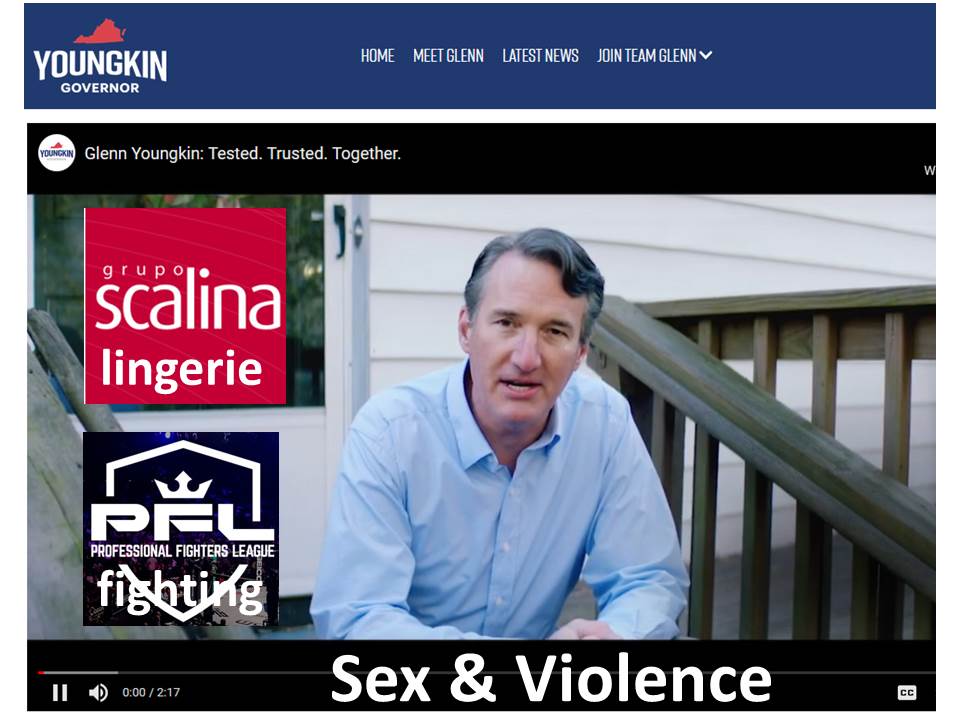
Ex-Carlyle Group CEO Youngkin Seeks Va. Governor Nomination


Glenn Youngkin spent twenty five years working for The Carlyle Group, a politically connected private equity underwriter (PEU).  Youngkin rose through the ranks, ending up as co-CEO.  

Youngkin retired from Carlyle last year to pursue political opportunities.  He currently is seeking the Red Team's nomination for Governor of Virginia as a "new kind of leader."

"I spent the last 30 years building business, creating jobs, and bringing people together to succeed. Guided by my faith, I will bring that same dedication to serving Virginians."

His record shows Glenn served on the board of Brazilian lingerie company Scalina and an early investor in the Professional Fighter's League.

His bio reveals: 

From October 2010 until March 2011, Mr. Youngkin served as Carlyle’s interim principal financial officer. From 2005 to 2008, Mr. Youngkin was the Global Head of the Industrial Sector investment team. From 2000 to 2005, Mr. Youngkin led Carlyle’s buyout activities in the United Kingdom and from 1995 to 2000, he was a member of the U.S. buyout team. Prior to joining Carlyle in 1995, Mr. Youngkin was a management consultant with McKinsey & Company and he also previously worked in the investment banking group at CS First Boston.

During Youngkin's tenure Carlyle hired many ex-politicians, including former British Prime Minister John Major  Major's hiring occurred while Youngkin led Carlyle's PEU activities in the U.K.

As Global Head of the Industrial Sector Team Youngkin oversaw the movement of U.S. jobs to China.  Consider United Components (UCI) which Carlyle owned from 2004 to 2010.

When Carlyle purchased UCI it had no Chinese subsidiaries.  By 2010 UCI had thirteen subsidiaries in China or Hong Kong.  The number of employees fell from 6,900 to 4,350.  Carlyle pulled $35.3 million from UCI via a special dividend in 2007.   Add their $2 million annual management fee and the total rises to $47.3 million.  How many U.S. jobs did The Carlyle Group send to China outside UCI?

UCI's is but one story Carlyle sending American jobs overseas.   Nature's Bounty had no Chinese facilities when The Carlyle Group bought the company in 2010.  The company took a $35 million jobs package from Long Island to relocate jobs from China and other U.S. facilities.

China. -- As of September 30, 2013, our subsidiary, Ultimate Biopharma (Zhongshan) Corporation ("Ultimate") owned in Zhongshan, China: a 50,000 square foot facility for manufacturing softgel capsules and for administrative offices, a recently built 75,000 square foot warehouse facility with packaging capabilities and 18.5 acres of vacant land adjacent to the manufacturing facility. In addition, Ultimate leased 11,300 square feet of dormitory space and 4,800 square feet of warehouse space in Zhongshan City. Also, one of our subsidiaries leased 84,800 square feet of warehouse space in Beijing. 
Note:  Nature's Bounty had no manufacturing facilities in China in its final 10-K filing before Carlyle's 2010 buyout. 

At the 2012 World Economic Forum in Davos, Carlyle co-founder David Rubenstein expressed his preference for the Chinese totalitarian model of central planning.  Rubenstein offered a dark vision for those not adhering to his advice.

"Our children are going to have and our grandchildren are going to have" a lower quality of life and a less affluent lifestyle than we enjoy today

In many ways PEU Rubenstein made his vision a reality with help from his Co-CEO Glenn Youngkin.  The greed and leverage boys used to hire former politicians.  Their innovation is to send PEUs into the political arena and pretend they didn't send millions of jobs overseas.  

Youngkin is running in the complicated Republican gubernatorial convention to be held on May 8th. The convention will have multiple voting sites, ranked-choice voting, an unlimited number of delegates and weighting by locality.  It's as simple as PEU return on equity calculations. 

Youngkin spoke against high taxes and said that he will “revitalize, reinvigorate and rebuild Virginia’s economy like never before.”

The tax avoidant billionaire class can count on Youngkin. 

Saturday, October 20, 2012

Carlyle's Quotable Co-founders

The Carlyle Group, now publicly traded, is run by three of its original co-founders.  Two co-founders stood front and center this week in the business media.

Carlyle Group co-founder William Conway said relations between buyout firms and investors “have passed their nadir.”  This came after an investor dressed down Conway for private equity's fee fractal.  Bloomberg reported:

Oxford University’s investment chief attacked private-equity funds’ charges, saying firms such as Carlyle Group LP (CG) are more interested in collecting fees for managing money than generating top returns for their backers. 

Presidential hopeful Mitt Romney, co-founder of Bain Capital, is a fellow private equity underwriter (PEU).   Consider Romney's PEU role, as described by the unhappy investor:

“The resources and expenses investing through limited partnership structures is a pain in the backside,” she said. “It is as if you make it deliberately hard for us, you make it hard to get in, the tedious fundraising process, the fight for allocations, the pain of partnership documents, the fees. And not just the headline figure, all the tricks we have to look out for such as transaction fees, monitoring fees, fees for paying the fees for your software licenses, fees for visiting limited partners. Come on guys, pay your own bills.” 

Private equity gets preferred taxation on carried interest.  Carlyle's co-founders are on record as hating taxes, which was the subject addressed by co-founder, David Rubenstein, the firm's public face..  CNBC reported:

“The most important thing the next president has to do is resolve the uncertainty of the debt and deficit,” Rubenstein said, adding that it was impossible to predict whether either President Barack Obama or Republican nominee Mitt Romney would be better for the economy.

Rubenstein, ever the marketer, dangled higher returns during times of disequilibrium,

“You make most of your money when you’re doing things in an uncertain environment,” he said. “So disequilibrium is the kind of thing that people like us like.”

How many Carlyle funds is Rubenstein marketing at the moment?  It was kind of Andrew Ross Sorkin and CNBC to give him free aim time.  Rubenstein used it to give a basic description of private equity, so people could understand Mitt Romney's background.  Joe Kernan lobbed a softball question on what PEU's need tax policy wise to invest in U.S. companies and keep jobs here:  Rubenstein replied:

1.  Certainty - we need to know what the tax policy will be for the next couple years.

One thing's certain, Rubenstein worked hard on Capital Hill the last six years to keep private equity's preferred taxation on carried interest.

2.  Certain incentives would also be valuable.

Rubenstein knows how to milk Uncle Sam's trillions in annual spending.  It pulled out of bidding on Virginia's ports after finding the expectation that it would need to pay much higher local taxes.

3.  Opportunities to manufacture in the U.S. at lower prices than people thought was the case.

This comes as result of direct and indirect government subsidies, as well as dumping worker pension funds. 

4.  Capital gains taxes will likely be higher in any budget deal, but lower than they've been for the last decade or so.  

The Bush tax cuts went into effect in 2001.  So for the last decade, the capital gain rate has been 15%.  That's the same rate PEU partners are charged on their investment returns, known as carried interest.  The Carlyle Group is a virtual nonprofit, like a church or safety net hospital. 

Rubenstein's PEU grand bargain has a slightly higher capital gains tax, alongside cuts in entitlement programs.  While Carlyle's operating companies cuts pensions, their co-founders support cutting Social Security and Medicare benefits.

Give the big money boys their certainty.  I expect PEU sponsored politicians to do just that.

Monday, December 9, 2013

The Rubenstein PEU Fascination

Forbes interviewed Carlyle Group co-founder David Rubenstein, one of the most public faces in private equity underwriting (PEU).  They found five fascinating things about Rubenstein:

Number 1: Sub-Saharan Africa and Other Emerging Opportunities

When you have a young population combined with enormous minerals extraction opportunities and a growing consumer market, you also have enormous potential opportunity.
It sounds like the place for a huge PEU profitgasm.  Recall that Carlyle mostly buys and sells companies for huge profits.  Some of those companies are in the energy space and others in consumer goods/services.  Carlyle and its ilk hollowed out America's middle class during the President George W. Bush years and Africans are supposed to trust the latest group of predatory white PEU men looking to profitably trade local companies?   

Number 2: Private Equity Investing: Now and the Future

As for investing in private equity now, David says it’s a wonderful time to sell since company valuations are so high, but a tougher time to invest for the same reason.  He is bullish, naturally, on private equity, and believes that more investors will have an opportunity to invest in private equity funds. David believes that in future years, investors may even be able to access private equity funds in their company 401ks.
High valuations echo 2007-2008, the run up to the financial crisis. Remember Rubenstein is the consummate PEU salesman and Forbes gave him free promo space.  No matter what's going on it's the perfect time for high net worth individuals and sovereign wealth funds to invest with Carlyle.

Everything distinctive about private equity, that supposedly contributed to Carlyle's incredible 30% annual returns on equity, will have disappeared when the SEC allows individuals to stock their retirement funds with PEU investments.  Investors who believe in Carlyle can become unit-holders today, have no say on anything and sit at the foot of the master's table waiting for crumbs to fall.  

Number 3: About the Fed and Future Taper Tantrums

We’re in uncharted waters and no one really knows what will happen when the Fed pulls back its bond buying program – even the Fed.
The Carlyle Group feasted off low interest financing, thanks to the Fed.  Carlyle executed  numerous liquidity recaps, i.e. loaded affiliates with more debt in order to pay themselves (sponsors) huge dividends.  If interest rates go up many of these debt instruments would likely explode, long after Carlyle monetized the affiliate for a multiple of their original investment (2 to 10 times).

Number 4: The Importance of Patriotic Philanthropy

While many may feel that the Federal government already takes too much of our money, David points out that it just doesn’t have the money to make the necessary renovations to our national treasures and symbols, like the National Mall in Washington, DC. He thinks that everyone can participate in patriotic philanthropy in some way and help preserve our beloved historical sites.
Rubenstein saved hundreds of millions in taxes from Carlyle's being a virtual nonprofit, and paying preferred carried interest tax rates on PEU income.  The Carlyle Group located in Washington, D.C. for the very purpose of being close to Uncle Sam's wallet, currently spending $13 trillion per year.

PEU's want lower corporate taxes and the D.C. crowd seems determined to comply.  Rubenstein knows his banks wouldn't fund the annual budget deficits our federal government runs.  He also knows the Fed will.  Carlyle will suckle for as long as possible on the federal teat by rotating in and out of companies services the government funds (which leads to his next fascinating statement).

Number 5: Making the Case for Higher Education

“Over the course of history, education produces people who are better citizens,” David said. “We should want people who are better educated.”

Knowledge and wisdom are characteristic of people who are better citizens.  The people have been repeatedly lied to by our political and business leaders.  Better citizens learned "eliminating nonexistent weapons of mass destruction opened up new markets to Western goods or gave American branded multinationals access to our oil."

Rubenstein wants citizens to believe "his greed is good" and "crony capitalism is free market capitalism."  I hope many in our league of humanity know better.  That includes Africa and 401(k) holders.

Wednesday, February 12, 2014

PQ Holdings Under PEU Ownership


PQ Holdings can be examined under the lofty assessment of a Business Ethics professor at NYU's Stern School of Business who stated in DealBook:

"Private equity is all about coming in, finding the inefficiencies, ripping them out, putting in better procedures and making the thing more valuable.”

One of those "better procedures" is the annual management fee, consulting agreement or monitoring fee charged to PQ by its private equity underwriter (PEU) owners.

Consulting Agreement with Carlyle 

PQ Holdings Inc., TC Group IV, L.L.C., an affiliate of Carlyle, and PQ Corporation entered into a consulting agreement relating to the provision of certain financial and strategic advisory services and consulting services. We paid a one-time fee in the amount of $12 million on July 30, 2007 for structuring the acquisition of our company by Carlyle. In addition, we agreed to pay an annual monitoring fee equal to $2 million. In conjunction with the INEOS Silicas acquisition on July 2, 2008, the consulting agreement was amended to increase the annual monitoring fee to $3 million. TC Group IV, L.L.C. assigned the consulting agreement to Carlyle Investment Management L.L.C., another affiliate of The Carlyle Group, on June 7, 2012. We will pay Carlyle Investment Management, L.L.C. a $ fee to terminate the consulting agreement in connection with the consummation of this offering.

That's $29 million in management fees to Carlyle since 2007.  How many millions extra will Carlyle charge to terminate the consulting agreement?  Rest assured, it won't be cheap.

That said, PQ has more than one PEU owner.

Consulting Agreement with INEOS 

PQ Holdings Inc., INEOS (Capital Partners) and PQ Corporation entered into a consulting agreement relating to the provision of certain financial and strategic advisory services and consulting services. We paid a one-time fee in the amount of $6 million on July 2, 2008 for structuring the INEOS Silicas 2008 acquisition. In addition, we agreed to pay to INEOS an annual monitoring fee equal to $2 million. We will pay INEOS a $ fee to terminate the consulting agreement in connection with the consummation of this offering.

That's $16 million or more in additional annual PEU fees for PQ Holdings, bring the total to $45 million since 2007.

Add $5.2 million in PEU dividend distributions from 2009-2012 and PQ's sponsors sucked $50 million in cash from the firm.  These PEU efficiencies likely required headcount and benefit reductions.  The defined benefit pension plan was frozen right before Carlyle purchased PQ.

The Company’s funding policy is to fund the minimum required (defined benefit pension) contribution under local statutory requirements.

As of 12-31-12 the company's pension was underfunded by roughly $50 million.  The underfunded amount grew by $40 million under PEU ownership.  SEC filings show a pension plan contribution of $5.5 million in 2006

PQ did the same with its retiree health care retirement plan just prior to Carlyle's purchase.

These (retiree health care) plans were closed to new retirees in the United States and Canada as of December 31, 2006. 

As for making the whole thing "more valuable," Carlyle loaded PQ up with debt when it bought the firm for $1.5 billion.  Annual interest expense rose to the $110 to $120 million range under PEU ownership.  This helped put the company into a loss position, where it could obtain net tax subsidies from Uncle Sam.  Here's the picture going forward:

The Company has a net operating loss carryforward available of $241,053,000 to reduce future federal taxes payable from tax years prior to 2012. The federal carryforward period is 20 years.
This is the PEU way, which I characterized as:

"Ripping out inefficiencies" like people and pensions.  "Better procedures" like PEU annual management fees and special distributions.  "Making the whole thing more valuable" via debt balloons requiring affiliates to pay dramatically higher interest costs and significantly lower taxes.  All so they can flip the thing in one to five years time for a multiple of their original equity investment. 
I challenge business ethics professor's proffering standard PEU drivel through The Carlyle Group's ownership of PQ, doing so with data from PQ's S-1.  There are other ethics stories embedded in the public document, free for business ethics examination.  It merely takes time and an ethical framework.

Update 2-15-14:  PQ's history includes Carlyle buying it from JP Morgan's PEU division, CCMP Capital Partners. PEU CCMP put the pension plan and retiree healthcare on ice.  Also, Naked Capitalism pointed out the impact the greed/leverage boys had the last few decades as did The Herald Scotland on 2-17-14.

Update 9 -28-14:  Carlyle cancelled PQ's IPO.

Update  6-13-17:  Carlyle is taking another run at a PQ IPO.

Thursday, May 13, 2010

Carlyle Group Building Ports Portfolio


Bloomberg reported The Carlyle Group is one of five reported likely bidders on Istithmar’s port and shipping agent, Inchcape Shipping Services. Istithmar describes Inchcape as "world's largest private Marine Management services provider." Inchcape Shipping has 237 offices in 60 countries around the world. They serve the following U.S. cities (according to their website):

Baltimore
Beaumont
Brunswick
Charleston
Corpus Christi
Galveston
Georgetown
Honolulu
Houston
Houston Headquarters
ISS Global AMS and ENOA/D Service Center-Portland
ISS Machinery Services Ltd. New Jersey
ISS Service Centre - Houston
Jacinto Port
Jacksonville
Lake Charles
Long Beach
Miami
Mobile
New Orleans
New York / New Jersey
Norfolk
Pascagoula
Philadelphia
Point Comfort
Port Everglades
Portland, Maine
San Francisco
San Juan
Savannah
Seattle WA
Tampa
Wilmington
Portland OR (USA)
St. Croix
Morehead City

How might this help Carlyle should they win Inchscape from their Dubai based owners? Tapped out state governments are looking to monetize public infrastructure. The Carlyle Group submitted a conceptual proposal to operate Virginia's ports in 2009. Galveston, Texas may soon seek bids from "private partners."

Carlyle's Virginia aspirations may get a boost from the chair of the Governor's Restructuring Commission, an ex-Carlyle Senior Advisor. State governments are bad at due diligence with politically connected, but ethically challenged private equity underwriters (PEU's). Connecticut inked a deal with Carlyle on 23 rest stops, this despite direct experience with their nefarious behavior.

This wouldn't be the first deal between Carlyle Group and Istithmar World. Carlyle sold U.S airport operators, Landmark Aviation and Standard Aero, to Istithmar affiliate Dubai Aerospace in 2007.

The airport deal occurred between the Dubai Ports World outrage and the NASDAQ/Dubai Bourse sales uproar, only Carlyle's deal warranted barely a peep. The Bush White House said nothing, despite being very concerned about smuggling through Dubai.

After his apoplexy over the Dubai Ports sale, New York Senator Chuck Schumer blocked for the airport deal. Schumer's PEU water carrying role continued with his defense of private equity's preferred taxation on carried interest.

Even though they hate taxes, PEU's love to suckle on the government teat. Inchcape hangs on that very bosom.

Watch Inchcape to see which PEU wins.

Update: Carlyle dropped out of bidding for Inchcape. Cinven Group and CVC Capital are the only remaining bidders.