Saturday, July 30, 2016

Carlyle's Rubenstein to Help Harvard Invest After Years of Underperformance


Harvard University announced over a year in advance:

David M. Rubenstein, co-founder and co-CEO of The Carlyle Group, the private-equity and investment-management firm, will join the Harvard Corporation in July 2017
Two weeks prior to the news release on Rubenstein's appointment Bloomberg reported:

Harvard University disclosed Friday that former investment chief Jane Mendillo received $13.8 million, reflecting 18 months of compensation at the largest endowment in higher education.
Mendillo, 57, ran Harvard Management Co., the university’s nonprofit investment arm, for more than six years, leaving at the end of 2014. Mendillo declined to comment on her compensation.
With a $37 billion endowment, Harvard is known for paying top dollar to investment staffers. Its top six endowment managers earned a combined $50 million in 2014, up slightly from $49.3 million in 2013.
Rubenstein will join the board that manages the Harvard endowment.  It operates much like a private equity underwriter (PEU) in trying to maximize investment profits on behalf of the University.  Harvard's announcement gave a shout out to other alumni who benefit from America's perverse taxation of private equity and other investment firms.

Unusually among private-equity managers, Rubenstein is outspoken on certain public issues, perhaps reflecting his prior experience in private law practice and in government.

A recent New Yorker-ProPublica “Letter from Washington,” focusing on the favorable tax treatment of private-equity and hedge-fund managers’ “carried interest,” reported on Rubenstein’s leadership role for his industry in defending that tax provision
Due to Rubenstein's success secretaries, chauffeurs and gardeners can continue paying a higher tax rate than their billionaire PEU employers.

Carlyle is having a hard time generating returns according to comments made last week on Q2 earnings.  That fits with Harvard's Management Co.'s experience:

After years of missteps, controversy and even crisis, Harvard Management Corp., which oversees the university’s $37.6 billion endowment, began assembling a new corps of equity traders and analysts in 2014, in hopes of recapturing a part of the investment magic that had once made the fund the envy of the world.

Only now, just two years later, that plan has collapsed.
Harvard has a year to right the ship before Rubenstein joins their investment arm as a board member.

Harvard decided to dismantle the in-house equities team after concluding that it would lean more on outside money managers “who have the resources, skill and experience,” Paul Finnegan, chairman of HMC’s board, said in a statement Wednesday.

Carlyle might even help in between as HMC invests between 13 and 23% of its assets in the PEU space.  

Update 1-25-17:   ZeroHedge reported Harvard's endowment will fire half its staff as it turns to outside money managers.  Their story said the endowment managed just shy of $36 billion.  That's a drop of over $1.5 billion.

Update 5-26-23:  Rubenstein's time on the Harvard Corporation board is coming to an end.

Thursday, July 28, 2016

Carlyle Group Legends Admit Failure


WSJ presented evidence of difficulties facing private equity underwriters.  They failed to mention loss of investor confidence as The Carlyle Group's assets under management fell to levels not seen since 2013.


WSJ reported:

“Right now, it is tough to earn returns of 20% or more in the private-equity business,” Mr. Conway said on an earnings call Wednesday, referring to the returns historically achieved by the industry’s top-performing funds.
Not long ago Carlyle's co-founders bragged of 30% annual returns.

Investors are “willing to take lower rates of return than the kinds that we’ve averaged over our history,” Mr. Rubenstein said. “It’s just so difficult now with low interest rates and low equity market appreciation to get these kind of returns anywhere else.”
Spoken like a true PEU.

Sunday, July 24, 2016

Governor Tim Kaine Kept Study on Virginia's Health Reform Secret


In 2007 Virginia Governor Tim Kaine refused to share a study used by Health and Human Services Secretary Marilyn Tavenner to reform the state's healthcare system.  Tavenner used the privately funded but publicly used document in fulfilling her charge to Governor Kaine.

"With more than one million Virginians lacking health care coverage and growing shortages of health professionals in all disciplines across the commonwealth and the nation, we must look for creative ways to further improve the delivery of health care to all Virginians"--Gov. Kaine
As there is no report to review the public can't look for ways in which healthcare companies stood to profit from actions taken by Governor Kaine and Secretary Tavenner.

Politico reported on Governor Kaine:

Teva Pharmaceuticals gave him $12,000 for travel to the August 2006 Democratic Governors Association meeting in Aspen. The Israeli drug company lobbied the state government and later bought a facility in Forest, Virginia.

Americans know health care has become increasingly unaffordable and unavailable under high deductible plans where the individual is responsible for a greater portion of health care bills as employers shed their traditional responsibility to insure workers and retirees.  For most workers rising health insurance costs quickly ate up paltry wage increases employers infrequently doled out.  

If Mrs. Tavenner's name sounds familiar she was head of President Obama's HHS.  Many will recall Congressman grilling her over the abysmal rollout of public health insurance exchanges.  She's now the head of AHIP, the health insurance lobbying group.  That group had undue influence in reforming our healthcare system.  PPACA passed in part due to President Bill Clinton.

Today's abysmal, overly expensive healthcare system is a product of both political parties putting corporate will and welfare over that of citizens.  Tim Kaine helped this change happen in Virginia behind closed doors.  Obama's White House did the very same.

Those who like their healthcare:  Tim Kaine and Hillary Clinton are for you.

Aeropostale Experiences Noxious PEU


Bankrupt teen retailer Aeropostale may rue the day it partnered with private equity underwriter (PEU) Sycamore Partners.  In 2013 Sycamore purchased nearly 8% of the company as an activist investor.  Aeropostale then borrowed $150 million from Sycamore in 2014.  This loan gave Sycamore two board slots and committed Aeropostale to use Sycamore affiliate MGF Sourcing.  At the time Bloomberg reported:

The financing agreement also includes a strategic partnership with MGF Sourcing, an affiliate of Sycamore, that will diversify Aeropostale’s clothing production. 
Aeropostale's relationship with MGF Sourcing deteriorated according to Bloomberg's piece from March 2016:

The dispute with MGF is adding to Aeropostale’s woes. When Sycamore helped connect the two companies, it was seen as a way to diversify Aeropostale’s clothing production. But the retailer said on Thursday that MGF is disrupting its supply of merchandise and violating the terms of their agreement. The problem could widen losses by $5 million to $8 million if shipping delays continue, Aeropostale said.
Sycamore's Stephen Kaluzny unloaded 6.1 million shares of Aeropostale stock in February for 17 cents per share.

Aeropostale declared bankruptcy in May and asked the court for permission to investigate the role Sycamore Partners playing in Aeropostale's demise. Sycamore bought Aeropostale stock through Lemur LLC and provided debt financing via Aero Investments LLC.

While Aeropostale searches for a white knight to take it out of bankruptcy the company fired back at Sycamore.  Reuter's reported:


Bankrupt U.S. teen retailer Aeropostale (AROPQ.PK) filed a motion against its lender, private equity firm Sycamore Partners, in bankruptcy court late on Friday, accusing it of plotting a "loan to own” scheme to push the chain into bankruptcy. Aeropostale asked a U.S. bankruptcy court judge to bar Sycamore from using the $150 million it is owed as credit to bid on the company, which is up for sale in a court-supervised auction. Aeropostale also wants the judge to reduce how much Sycamore would be repaid on its loan.
Aeropostale wouldn't be the first PEU affiliate taken over by their former savior.  The Carlyle Group back doored Mrs. Fields and Brintons.  Aeropostale finds itself in a special situation, one that attracts  financial hyenas

Friday, July 22, 2016

Bliderberg Protector Thiel Stumps for Trump

Silicon Valley's Peter Thiel endorsed Republican Presidential candidate Donald Trump in Cleveland.  Frankly, his speech is odd in light of what Thiel said fifteen months ago:

“Calling our society a democracy is very misleading,” Thiel went on. “We’re not a republic; we’re not a constitutional republic. We live in a state that’s dominated by these technocratic agencies.”

Government isn't sclerotic, it's been overrun by a toxic virus of "technocratic agencies" looking to optimize Uncle Sam's trillion dollar budget for their personal gain.

It delivered for Peter Thiel.  The CIA funded Palantir, his startup security company.

A Palantir is a seeing rock.  Thiel's firm uses massive secret databases for spying purposes.  That can't happen in a functioning constitutional republic with a 4th amendment protecting the public from illegal search and seizure 

Bloomberg highlighted Palantir's roots:

They devised ways to get information about a person’s computer, the other people he did business with, and how all this fit into the history of transactions.
Fortune called Palantir's technology "maximally unintrusive."   

Bloomberg described:

Using Palantir technology, the FBI can now instantly compile thorough dossiers on U.S. citizens, tying together surveillance video outside a drugstore with credit-card transactions, cell-phone call records, e-mails, airplane travel records, and Web search information. 
Palantir protects the annual global tamperer confab, also know as Bilderberg.  This technocratic agency warranted its own "no fly zone" in the Swiss Alps.  It produces positions its attendees are supposed to advance.  Participants are required to maintain absolute secrecy.

This makes Bilderberg what, a governing body, a cult or a terrorist group?  Peter Thiel endorsed Trump as the next Chief Executive for Technocratic Agencies.

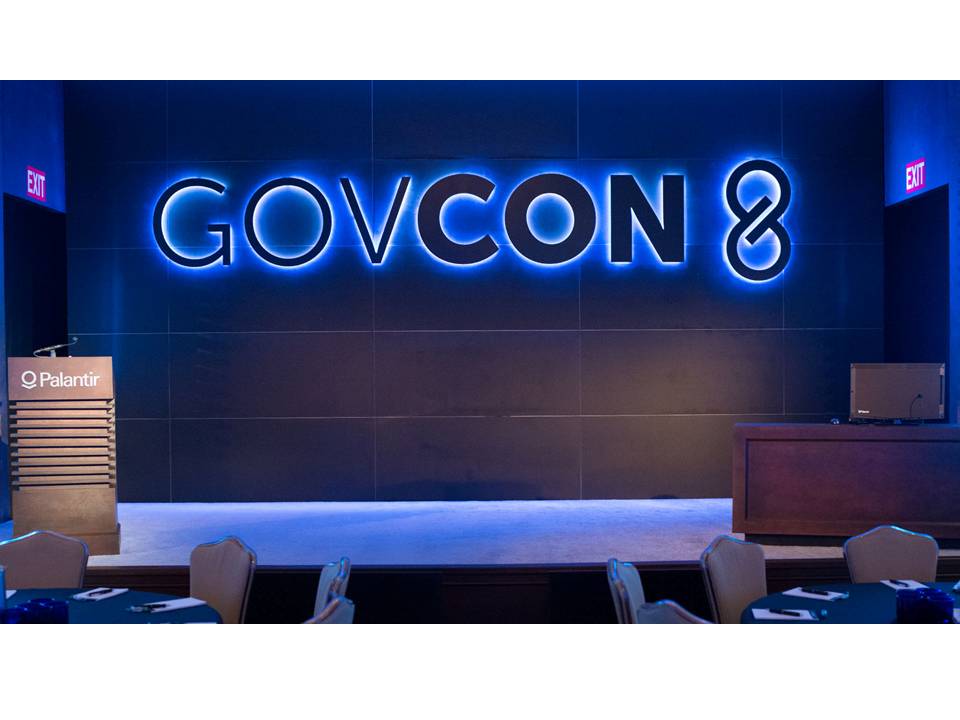
GovCon 8 was Palantir's largest and most successful conference to date with over 1,500 attendees from government, military, intelligence, and financial sectors.
Trump stands to send huge security business Palanatir's way.

Update 7-24-16:  Jesse's Crossroads Cafe offered:
 "Our plutocracy, whether the hedge fund managers in Greenwich, Connecticut, or the Internet moguls in Palo Alto, now lives like the British did in colonial India: ruling the place but not of it." 

 Mike Lofgren, The Deep State: The Fall of the Constitution and the Rise of a Shadow Government, 5 January 2016

Update 11-11-16:  Thiel will serve on President elect Trump's transition team.

Update 7-30-17:  The past is predictive of the future until it's not.  Hedge funds and banks now make use of Palantir's seeing eye to make billionaires richer.  That's our bipartisan democracy in America in 2017.  

Update 11-11-23:  Billionaire Peter Thiel had this to say about his past support for Donald Trump:

“There are a lot of things I got wrong,” he acknowledged. “It was crazier than I thought. It was more dangerous than I thought. They couldn’t get the most basic pieces of the government to work. So that was—I think that part was maybe worse than even my low expectations.”
And these are the people driving government policies...


Monday, July 18, 2016

Carlyle Capital Trial Underway


Carlyle Group co-founder Bill Conway testified in Guernsey in defense of the failed Carlyle Capital Corporation (CCC), a highly leveraged mortgage backed security investment.  CCC liquidators brought a $1 billion suit against parent Carlyle Group.  WSJ reported on Conway's responses under oath:

On CCC’s use of 30 times or more borrowed money: “It was highly leveraged but I didn’t think the risks were going to happen, the risks that led to the downfall of CCC, the systemic market collapse.” 

On 2007’s credit crunch: “I certainly did not think it was something that was going to lead to the end of Lehman Brothers, the end of Bear Stearns, the end of Wachovia, the end of Merrill Lynch as companies.”
Conway admitted CCC was a canary in the coal mine of financial crisis. The WSJ piece also has a series of e-mails between Carlyle chiefs as CCC approached implosion.  Creditors no longer trusted Carlyle to make good on its bets.

Corporate debt, much of it private equity sponsored, ballooned since the financial crisis.  Just like CCC got overrun in 2007 private equity loans could be at risk.

Carlyle recently sold Brazilian lingerie maker Scalina for a huge discount in order to pay creditors something.  The Carlyle Group is also down $25 billion in assets under management in the last year.  Darkness looms as Carlyle reminds us of their shenanigans during the last financial crisis.

Saturday, July 16, 2016

Brazilian Banks Subsidize Carlyle's Scalina Sale


Reuter's reported:

Lupo SA, a Brazilian underwear producer, has agreed to buy Scalina SA, a lingerie and hosiery maker backed by Carlyle Group LP, for an undisclosed sum.
A source with direct knowledge of the deal told Reuters that Lupo and Scalina's owners - Carlyle, millionaire Artur Grynbaum and the company's founding Heilberg family - negotiated a price tag of around 90 million reais ($28 million) for the company.
Six years ago Carlyle acquired a 51% stake in Scalina for 280 million Brazilian reais ($160 million).  An earlier Reuter's piece detailed the challenges Carlyle faced in operating Scalina:

In 2010, when Carlyle bought 51 percent of Scalina, revenue was growing at an annual rate of 20 percent.

But one year later, when Scalina's retail strategy foundered, the buyout firm allowed a new investor group led by Grynbaum to inject cash in the company in exchange for the minority stake.

Carlyle has been trying to sell Scalina for the past three years, since the economy show signs of cooling, the sources said.
Carlyle is finally out of Brazilian lingerie.

Under the plan, proceeds from the deal will be used to help repay part of 160 million reais ($48.65 million) in loans that Scalina took from Itaú Unibanco Holding SA, Banco Santander Brasil SA and Banco do Brasil SA, the sources added. As part of the agreement, the banks will take a loss on the principal of the debt.
Carlyle likely got something from the company, management fees, debt for dividend, or a portion of new investor funds.  But Carlyle's Brazilian underwear venture shrank significantly.


I find it hard to believe Carlyle recouped their original $68.3 million cash investment in Scalina.  If they did it was due to the generosity of the company, a new investor and the final bank subsidy.  Carlyle and Scalina know but they aren't talking.

Update:  Oddly The Intercept has a story on Brazilian billionaires.  It seems Brazil's super wealthy have much in common with our greed and leverage boys. 

Update 7-28-16:  Carlyle plans to sell a huge stake in Brazilian travel operator CVC.