Showing posts sorted by relevance for query not that carlyle. Sort by date Show all posts

Wednesday, August 3, 2011

Carlyle Flipping Missoula's Mountain Water: Trade Secret

The Billings Gazette reported testimony given to Montana's Public Service Commission on The Carlyle Group's proposed acquisition of Park Water, owner of Missoula's Mountain Water.

The Carlyle Group has said it intends to be a long-term owner of Mountain Water (by purchasing its parent, Park Water Co. of California), information from the firm appears to reveal that Carlyle has plans to sell it in the “not too distant future.”  Wilson did not reveal the number of years that Carlyle planned to hold the investment, because Carlyle considered it a trade secret.

Carlyle’s exit strategy also lists an annual return expected by the firm — an amount also blacked out in Wilson’s testimony, but characterized by Wilson as “a very large annual return.”

Achieving that return could be harmful for Mountain Water customers, Wilson said, because it might mean raising water rates excessively or making large equity payouts.
Carlyle's expected annual return is 30%.  Cofounder David Rubenstein suggested Carlyle would accept a little less for publicly guaranteed infrastructure projects, say 15%.

Did Carlyle cite their common practice of floating debt for dividends, i.e. large equity payouts?  They did it with Booz Allen Hamilton and Dunkin' Donuts.  What about carried interest, PEU's stake of any investment profits in a venture?

Carried interest may create an incentive for the general partner (or similar managing fiduciary) of a Carlyle-sponsored investment vehicle to make riskier or more speculative investments on behalf of such Carlyle-sponsored investment vehicle than would be the case in the absence of this arrangement.
That's quite a confession from Carlyle, known for burying bad consequences.

Carlyle's regulatory submission revealed a $102 million price tag for Park Water.  It states Carlyle expects Park Water to be the platform company in the water space for Carlyle Infrastructure Partners.  The offer letter to Henry H. Wheeler, Jr. contains:

We would also like to explore retaining you as a board member or consultant post acquisition.  This offer is contingent upon your maintaining the contents of this letter and all related documents and the fact we have delivered it to you, in the strictest confidence.

It's followed by a threat that Carlyle could declare the offer null and void.  It gets better:

Carlyle refused to provide to regulators or the Consumer Counsel its detailed analysis and expected financial results from the purchase.
Carlyle described their analysis before making an offer for a potential affiliate:

In considering potential investment opportunities in the corporate private equity setting, a number of analytical methods are utilized in an effort to achieve a thorough and in-depth assessment of the potential investment. Typically, these analyses focus on the (i) reputation of shareholders and management; (ii) company size and sensitivity of cash flow generation; (iii) operational, marketing, legal, tax, labor, environmental and accounting factors; (iv) business sector and competitive risks; (v) industry competition, both domestically and abroad; (vi) portfolio fit; (vii) exit alternatives; and (viii) other key factors highlighted by the investment team.
In light of Carlyle's extensive due diligence, I was surprised by this response regarding pensions:

a. Is the existing pension plan fully funded? If not, why not?

RESPONSE: Carlyle does not have current information responsive to this data request.

b. Who controls the pension plan, how is it invested, and will it be continued at its present
funding?

RESPONSE: Carlyle does not have current information responsive to this data request.
Carlyle purchased RAC without taking on the pension obligation.  Their slippery response raises questions which regulators should investigate.  Will the public interest be controlled by public servants or by PEU's?

Update 8-11-11:  Missoula won't be able to buy Mountain Water directly from parent Park.  Apparently, it has to be sold to Carlyle first.  The PEU (with its high return requirements) can then mark up Mountain Water for resale to a public entity.  That's the state of PPP's..  

Wednesday, March 19, 2008

We're Carlyle, but Not That Carlyle!


It took some White House quality word bending, but The Carlyle Group's IPO of China Pacific Insurance remains on track after the liquidation of its last public offering, Carlyle Capital Corporation. After reading their defense, I stamped it Dana Perino quality:

China's third majority life insurer and second majority property insurer China Pacific Insurance (Group) Co., Ltd. confirmed that Carlyle Capital Corp. had no relationship with the insurers' two foreign shareholders. The foreign shareholders are Parallel Investors Holdings Ltd. (PIHL) and Carlyle Holdings Mauritius Ltd. (CHML), two investment entities under the wings of Carlyle Group, not Carlyle Capital. Therefore, the recent bankrupt Carlyle Capital will not trouble the Hong Kong listing of CPIC, according to people at CPIC.

The private equity firm is famous not only for its insider political influence, but for segregating corporate assets into various corporations and subcorporations. In acquiring ManorCare, the huge long term care company, Carlyle split nursing home real estate from operations. In the case of a law suit, a harmed patient or surviving family member can't get at the building and its asset value. Carlyle usually finds ways to control their affiliates, even those that have gone public. They do so via controlling interests and board appointees. Their dance away from folded CCC is priceless.

Previously, Carlyle Group announced that it was just an investment consultant for Carlyle Capital, under the agreement between them, and it did not buy any securities of Carlyle Capital, although some persons in Carlyle Group totally hold an about 15% stake in Carlyle Capital.

Those "some persons" would be the founders and executives of the Carlyle Group, also known as its main principals. Contrast this statement with last summer's Forbes' piece on CCC's public offering:

The initial offering price for shares in Guernsey-based Carlyle Capital had already been reduced to $19 a share from $20-$22 when they came up for grabs on Wednesday. The company's Washington-based parent, Carlyle Group, trimmed the price on June 29 because of "instability in the credit markets that affected investor appetite," according to spokesperson Emma Thorpe.

Isn't that like a parent to abandon their child when they get in trouble? No rescue for CCC. Instead, Carlyle co-founder David Rubenstein let Carlyle Capital sink under the rising tide of bad mortgages. I bet they're hoping for a quiet Pacific typhoon season as China Pacific Insurance goes public. Carlyle's LifeCare affiliate didn't perform very well in the aftermath of Hurricane Katrina. But that's apparently a story for another day...

Saturday, February 25, 2012

Carlyle's Latest Bankruptcy: Medicaid Dental for Kids

The Tennessean reported:

A Nashville-based company that manages dental care centers in 22 states has filed for bankruptcy to restructure its debt and eventually attempt to sell its operations and assets.

Church Street Health Management LLC’s filing with the Middle Tennessee U.S. Bankruptcy Court this week listed roughly $85 million of assets and $300 million of liabilities.

How much goodwill did it take to get Church Street's sheet to balance?  Owners not only stretched the value of the company, they took liberties with kid's teeth and billing Uncle Sam.

That debt includes $150 million owed to its lenders and $17 million owed to several states and the U.S. Department of Justice under a settlement of charges that it billed Medicaid for unnecessary dental procedures for low-income children.
The settlement period runs from September 2006 to January 2010, all years under PEU ownership. Church Street's sins include:

(1) causing claims to be submitted by the Centers for reimbursement for performing pulpotomies that were not medically necessary and/or were performed in a manner that did not meet professionally-recognized standards of care

(2) causing claims to be submitted by the Centers for reimbursement for placing crowns that were not medically necessary and/or were performed in a manner that did not meet professionally-recognized standards of care

(3) causing claims to be submitted by the Centers for reimbursement for the administration of anesthesia (including, without limitation,nitrous oxide) that was not medically necessary, that was performed in a manner that did not meet professionally-recognized standards of care, and/or was administered by an unlicensed, non-certified, or otherwise unauthorized individual

(4) causing claims to be submitted by the Centers for reimbursement for extractions that were not medically necessary and/or were performed in a manner that did not meet professionally recognized standards of care

(5) causing the Centers to fail to obtain informed consent for certain dental procedures and services

(6) causing claims to be submitted by the Centers for reimbursement for fillings that were not medically necessary and/or were performed in a manner that did not meet professionally-recognized standards of care

(7) causing claims to be submitted by the Centers for reimbursement for sealants that were not medically necessary and/or were performed in a manner that did not meet professionally-recognized standards of care

(8)causing claims to be submitted by the Centers for reimbursement for radiographs (i.e., x-rays) that were not medically necessary, were taken in a manner that did not meet professionallyrecognized standards of care, and/or were taken by an unlicensed, non-certified, or otherwise unauthorized individual

(9) causing claims to be submitted by the Centers for reimbursement for behavior management techniques, including without limitation those techniques involving a papoose board, that were not medically necessary and/or were performed in a manner that did not meet professionally-recognized standards of care.
The above behavior resulted in a $24 million (plus interest) fine.  It seems Carlyle and Church Street are morally bankrupt as well as literally.

Did Church Street pay dividends or special distributions since The Carlyle Group invested in the company in September 2006?  If so, did PEU owners load Church Street with debt to fund payouts?

Medicaid considers management fees and capital cost reimbursable items on the acute side of health care.  Does it do the same for dental? 

How much did Carlyle, American Capital Strategies and Arcapita pull out of Church Street before it imploded?  Did any buy credit default swaps on Church's debt?  That could help ease the ache, but it would continue the morally bankrupt theme..

Private equity purports to be the savior of America's lopsided health care system.  Greed won't help, not in the least.

Update 1-29-13;  Senator Chuck Grassley lambasted Church Street, but gave their PEU owners a free pass.   Rubenstein et al oversaw an organization which traumatized children and bilked taxpayers 

Saturday, November 2, 2019

Carlyle Co-Founder Rubenstein History Maker


The Guardian ran a piece on Carlyle Group co-founder David Rubenstein and his historic life as a modern day robber baron.  The story began with Rubenstein's revealing interview at The Economic Club of Washington, D.C. 

Rubenstein interviewed Secretary of State Mike Pompeo in late July.  Pompeo noted President Donald Trump's use of financial leverage to achieve diplomatic goals.  Somehow burnishing Trump's image and re-election chances became a U.S. diplomatic goal.

MR. RUBENSTEIN: OK. So, when you have decisions with the president, meetings with him, is he best with oral communications, written communications? What’s the process by which decisions are made? Is it through the NSC10 or informal?

SEC. POMPEO: Yeah. So, there’s a very robust NSC process. When I brief him myself, I always prefer to have a document. It’s the way I prefer to receive information. So, I almost always bring something – a one-page summary at the very least, that says here’s the outline of what it is that I think are the priorities now. We should think about how we should frame this particular problem. And then the president does like to engage in oral exchanges. And I’ve found them to be elucidating for myself. I often learn things as well. He’s very focused on where the money is, and how we use economic leverage to achieve our diplomatic ends.
The piece ignored Rubenstein's profiting from the American military-corporate-economic juggernaut.  That is part of The Carlyle Group's history.

David Rubenstein has a book to sell, in addition to his ever present cheer leading for private equity underwriters (PEU), also known as the greed and leverage boys.  His book highlights great men among our Founding Fathers.


Thomas Jefferson was the first businessman to use his slaves a collateral for debt.  The Smithsonian wrote:

It had long been accepted that slaves could be seized for debt, but Jefferson turned this around when he used slaves as collateral for a very large loan taken out in 1796 from a Dutch banking house in order to rebuild Monticello.  He pioneered the monetizing of slaves, just as he pioneered the industrialization and diversification of slavery.
The Carlyle Group used very large loans for Carlyle Capital Corporation.  CCC's 2007 year end results stated:

As of February 27, 2008, the Companys $21.7 billion investment portfolio is comprised exclusively of AAA-rated floating rate capped residential mortgage backed securities issued by Fannie Mae and Freddie Mac, which are considered to have the implied guarantee of the U.S. government and are expected to pay at par at maturity. 
One week later Carlyle Capital Corporation was in deep trouble:

Carlyle Capital Corporation touched off a wave of selling on Thursday, especially in mortgage real estate investment trusts, after the company failed to meet some of its margin calls and received a default notice.

Carlyle Capital is a European listed, publicly traded company that is an affiliate of the much larger Carlyle Group, a private equity firm.

Carlyle Capital apparently received margin calls from seven different parties on Wednesday, totaling $37 million dollars. The company said that these parties demanded additional collateral and that Carlyle Capital was unable to satisfy four of their demands.

Carlyle Capital fell 58% on Thursday, touching off a wave of selling across the world that saw some REITS fall as much of 20%. The company is listed in Amsterdam.

According to a report in Bloomberg, most of Carlyle's counterparties are Wall Street firms
Two weeks later Carlyle revealed CCC would declare bankruptcy.  BBC reported:

On Wednesday, CCC said that it had not been able to refinance its business. It said it had so far defaulted on about $16.6bn (£8.1bn) of its debt and the only assets it had left were US government AAA-rated residential mortgage-backed securities. 

CCC said it also expected to default on this after the portfolio's value was marked down again on Wednesday.
On March 16, 2008 Reuter's reported:

Carlyle Capital, an affiliate of U.S.-based buyout firm Carlyle Group CYL.UL, said it has received default notices from its last two remaining lenders and believes that its lenders have now taken possession of substantially all of its U.S. government agency AAA-rated residential mortgage-backed securities (RMBS).
Carlyle Capital had $600 million in equity and $21 billion in debt.  A lawsuit revealed how Carlyle set up CCC's financing:

The RMBS assets were purchased using one-month repurchase (repo) borrowing. The assets were subject to daily margin calls if prices changed.
Financing long term assets with short term money, what could go wrong?  That question was not asked of Mr. Rubenstein.  It has bearing today as the Federal Reserve Bank entered the repo lending market in a big way

Carlyle danced away from CCC's carcass as it neared an IPO for China Pacific Insurance.

Previously, Carlyle Group announced that it was just an investment consultant for Carlyle Capital, under the agreement between them, and it did not buy any securities of Carlyle Capital, although some persons in Carlyle Group totally hold an about 15% stake in Carlyle Capital.
One might expect better from a storied private equity firm.  BBC noted at the time:

"Almost within the blink of an eye, a business that had borrowed $21bn from the world's biggest banks to invest in high-quality mortgage-backed securities will be gone, liquidated, kaput," said BBC business editor Robert Peston. 

"Such is the whirlwind blowing through global financial markets."
Six months after CCC's implosion the Financial Crisis hit.  Did that whirlwind grow into a Category 5 hurricane in part due to The Carlyle Group's actions?  Not asked, thus not answered.

Another item not recorded for history is why the Carlyle Group withdrew completely from the Corpus Christi oil shipping terminal at Harbor Island.  Carlyle lauded their role as "exclusive developer" one short year ago.

Trump's ongoing greatness and Rubenstein's ever present greed are unique in history. Neither make for an honest exploration of events.

Update 11-4-19:  PEU Blackstone's chief strategist warned the "mother of all bubbles" could blow up.  One sign of instability cited is the failure of the repo market.  JessesCafeAmericain shared a quote worthy of PEU founders and their exalted status:

"His money came from human misery and death and despair, as always it does.  Yet, there is none to reproach him, neither God nor man, and all fawn upon him and he will be a senator and crowds will laud him and he will have the ear of the President and all will honor his riches and consider him worthier than other men because of it.
Mankind adores its betrayers, and murders its saviors."

Taylor Caldwell, Captains and Kings
Update 11-5-19:  CNBC interviewed Carlyle co-founder David Rubenstein.  The PEU greed and leverage boys hate paying taxes. 

Saturday, September 3, 2022

Rubenstein Pans Lee on NYT Dealbook


Former Carlyle Group CEO Kewsong Lee remains under a multi-year nondisclosure agreement while Carlyle insiders tell stories about Lee's management failures.

A Dealbook interview allowed Carlyle co-founder David Rubenstein to bust Kewsong's chops in his usual indirect, manipulative manner.

Rubenstein talked about the longevity of founders --"maybe God loves them" --and suggested a new CEO might want to spend time with them.  

Lee had been with The Carlyle Group for nine years, five as Co-CEO or outright CEO.  He'd experienced a number of performance feedback sessions with Carlyle's board.

Rubenstein said Carlyle's infamous founders were not kept informed, a grievous error given their status at the PEU's biggest shareholder.  He gave a dig at Lee for the stock being in low $30 a share range.  The price was $38 a share before the high level divorce.

So Carlyle didn't have a perfect #1.  How about the #2 guy?  Rubenstein said:

"And we didn't have a perfect #2 there.  That was one of the concerns the board had had for a long time, which is that there should be a person groomed to be a successor.  And there wasn't one groomed."


Recall co-#1 Glenn Youngkin left the firm in Fall 2019.  The board united firmly behind Lee at the point.

"We are fortunate that Kew is extremely well positioned to serve as our CEO, and I look forward to continuing to work closely with him on behalf of all of Carlyle’s stakeholders.”  --David Rubenstein

"The Board is confident that Kew will build on the current momentum that has been achieved and we are excited to watch him lead and support the exceptional global team Carlyle has assembled.” --Bill Conway

COVID hit in March 2020 and Lee spent considerable time building a COVID portfolio of companies with the OneCarlyle team. 

Rubenstein didn't mention the legions of top talent that fled Carlyle, mostly for other private equity firms.  Many exiters ended up at the Federal Reserve Bank as Fed Chair (Jay Powell) or in other senior roles (Randall Quarles).  One became CEO of Nasdaq (Adena Friedman), another CFO of Comcast (Mike Cavanaugh) and another CEO of General Motors (Daniel Akerson).  

When asked if Carlyle would ever sellout Rubenstein responded "it's a publicly traded firm."  Yes, Carlyle buys publicly traded firms all the time.  However, he noted a change of control allows limited partners the right to get out of their specific Carlyle fund(s).  LPs could pull their invested capital and not fulfill further capital commitments.   I would venture a few LPs are unhappy as to how Kewsong was treated and might wish to pull their capital.

Andrew Ross Sorkin asked about  Rubenstein's Family Office (Declaration Partners) and any problems that caused.  The "nearly every billionaire does it" answer did not address Declaration Partners may compete with Carlyle on any deal and is a financial conflict of interest.  

Generous Rubenstein closed his response with he'd referred deals Declaration Partners did not want to Carlyle.  How is a CEO supposed to deal with a board member and founder dumping second hand prospects in his lap?  Lee cannot legally give an answer.

"It's amazing how, if you have a good track record, you can charge almost anything."
That's David Rubenstein near the end of the interview, not Bernie Madoff.   

I'm sure Kewsong Lee felt he had a good track record as Carlyle CEO but founders and the board balked at his request, sent him packing and have been running him down since.  


Oddly, over his nine year tenure with Carlyle there are no public pictures of Kewsong Lee with any of the firm's co-founders (Google image search).  The public faces of Carlyle don't seem to share the spotlight.

Update 9-6-22:  BOA gave a double downgrade to Carlyle lowering its price target from $58 to $33 per share.  "We believe the management change could adversely impact employee retention, fundraising, and CG's business strategy, including M&A and signal risk to prior financial targets/guidance." 

"One upside risk for the stock is Carlyle's $80B+ of dry powder, which the company can invest into a cheaper asset backdrop."  The would be courtesy of former Carlyle managing director and current Fed Chief Jay Powell. 

Update 11-9-22:  Carlyle reached a separation settlement with Kewsong Lee:

Carlyle said it will pay Lee $1.405 million as base salary and bonus as well as $1.95 million as stock dividends as a part of the separation agreement that terminates at the end of this year. The Washington, D.C.-based firm also agreed that most of Lee's restricted stock options would be allowed to vest between November and February next year.

Thursday, April 19, 2012

Carlyle Group PU - Partnership Units


SEC filings show current ownership stakes in Carlyle Holdings. Carlyle co-founders hold over 50% of the partnership units. That will decline to 45% when The Carlyle Group completes its IPO.

For those confused about the difference between partnership units and common units:

Subject to certain requirements and restrictions, the partnership units of Carlyle Holdings are exchangeable for common units of The Carlyle Group L.P. on a one-for-one basis, from and after the first anniversary date of the closing of this offering (subject to the terms of the exchange agreement). See “Certain Relationships and Related Person Transactions — Exchange Agreement.” Beneficial ownership of Carlyle Holdings partnership units reflected in this table is presented separately from the beneficial ownership of the common units of The Carlyle Group L.P. for which such partnership units may be exchanged.
But it's not really a level playing field between partnership and common unit holders:

We will reimburse our general partner and its affiliates for all costs incurred in managing and operating us, and our partnership agreement provides that our general partner will determine the expenses that are allocable to us.
The general partner will determine.

We will reimburse our general partner and its affiliates for expenses.
We will reimburse our general partner and its affiliates for all costs incurred in managing and operating us, and our partnership agreement provides that our general partner will determine the expenses that are allocable to us.

Our general partner intends to limit its liability regarding our obligations.
Our general partner intends to limit its liability under contractual arrangements so that the other party has recourse only to our assets, and not against our general partner, its assets or its owners. Our partnership agreement provides that any action taken by our general partner to limit its liability or our liability is not a breach of our general partner’s fiduciary duties, even if we could have obtained more favorable terms without the limitation on liability. The limitation on our general partner’s liability does not constitute a waiver of compliance with U.S. federal securities laws that would be void under Section 14 of the Securities Act.

Our common unitholders will have no right to enforce obligations of our general partner and its affiliates under agreements with us.
Any agreements between us on the one hand, and our general partner and its affiliates on the other, will not grant to the common unitholders, separate and apart from us, the right to enforce the obligations of our general partner and its affiliates in our favor.

Contracts between us, on the one hand, and our general partner and its affiliates, on the other, will not be the result of arm’s-length negotiations.
Our partnership agreement allows our general partner to determine in its sole discretion any amounts to reimburse itself or its affiliates for any costs or expenses incurred in connection with our activities. Our general partner may also enter into additional contractual arrangements with any of its affiliates on our behalf. Neither the partnership agreement nor any of the other agreements, contracts and arrangements between us on the one hand, and our general partner and its affiliates on the other, are or will be the result of arm’s-length negotiations. Our general partner will determine the terms of any of these transactions entered into after this offering on terms that it agrees to in good faith as determined under our partnership agreement. Our general partner and its affiliates will have no obligation to permit us to use any facilities or assets of our general partner and its affiliates, except as may be provided in contracts entered into specifically dealing with that use. There will not be any obligation of our general partner and its affiliates to enter into any contracts of this kind.

Our common units are subject to our general partner’s limited call right.

Wow, an opportunity for servitude and dilution. How many serfs will line up to become Carlyle Common Unit Holders, especially in light of Blackstone's underwhelming first quarter and nearly 5% stock price drop?

Update 4-20-12:  Will WaPo's Donald Graham get a commission for his paper's role in pushing Carlyle's IPO?

Wednesday, November 24, 2021

Youngkin Cannot Disparge Carlyle Group until September 2025


Virginia's Governor Elect for the Red Team Glenn Youngkin will be sworn into office on January 15, 2022.  The former Co-CEO for The Carlyle Group, a politically connected private equity underwriter (PEU), left Carlyle in September 2020.  His employment agreement with Carlyle has a Non-Disparagement Clause that runs for five years after separation.  It states:

Employer and Employee covenant and agree that, both during Employee’s employment with Employer and for a period of five years after the Termination Date, (i) Employee shall not disparage Carlyle, the Founders and Carlyle’s employees, directors or businesses or members of Carlyle’s Executive and Management Committees and (ii) Carlyle shall not authorize, and the Founders and Carlyle’s directors and members of Carlyle’s Executive and Management Committees shall not make, disparaging remarks about Employee. The previous sentence shall not apply, however, in the case of any statement that is made (x) in testimony pursuant to a court order, subpoena or legal process or (y) to a court, mediator, government agency or arbitrator in connection with any litigation or dispute between Employer and Employee.

As Carlyle Co-CEO Youngkin headed the firm's infrastructure efforts.  The Carlyle Group abandoned its lead developer role for deep-water oil terminal expansion for the Port of Corpus Christi, known as Harbor Island.  Glenn Youngkin's abdication left a roughly $400 million hole in that public-private partnership.  

Texas officials long looked the other way regarding Carlyle.  In 2004 Texas Governor Rick Perry provided $35 million to Carlyle affiliate Vought Aircraft Aviation for 3,000 jobs.  Come 2010 Carlyle cut 35 positions in the Dallas-Fort Worth area, garnering $1 million per job eliminated.

Youngkin and Carlyle's executive team chose not to pay back Texas taxpayers when they flipped Vought. for $1.44 billion

The Carlyle Group bid on Virginia Ports operations in 2012.   It later withdrew their proposal. 

The firm told officials it's no longer interested in pursuing a long-term lease of the Virginia Port Authority's terminals.
That ended prior to Carlyle inking a lead developer role.  Youngkin has been on the abandonment side of at least one public-private partnership and faced no public scrutiny. 

Virginia voters have a right to expect Glenn Youngkin not to have any restrictive clauses impeding his job as Virginia's Governor.   That his loyalty to Carlyle could stand above his oath to Virginians is cause for concern.

Update 11-26-21:  The head of Youngkin's transition team is a PEU.  Jeff Goettman founded CameronBlue Capital, a private equity firm in 2006. Previously, Mr. Goettman was a Managing Member at Thayer Capital Partners, a Washington, D.C. based private equity firm.  

The man who helped Youngkin avoid his actual record got hired by Narrative Strategies.  He once worked for Trump's disastrous Coronavirus Task Force.

Also, a Youngkin spokesperson confirmed transition officials have been asked to sign nondisclosure agreements.  Is there also a non-disparagement clause?

Sunday, November 17, 2019

Taylor Swift's Plea for Help Tests Carlyle Cool


Music superstar Taylor Swift has been blocked from using older songs and video in her upcoming American Music Awards appearance.  The Independent wrote:

“I’ve been planning to perform a medley of my hits throughout the American Music Awards,” she wrote, adding that Braun and Borchetta “said that I’m not allowed to perform my old songs on television because they claim that would be re-recording my music before I’m allowed to next year.”
This continues the ongoing bullying of Swift by Big Machine, which purchased Swift's music with funds from The Carlyle Group. 

Swift is being honoured with the Artist of the Decade trophy at the AMAs, which take place on 24 November.
An investor might view this award as adding to the value of their music holdings in Taylor Swift.

The artist is explicitly seeking help from Carlyle.  CNBC reported.

“I’m especially asking for help from The Carlyle Group, who put up money for the sale of my music to these two men.”
The Carlyle Group declined comment on the CNBC story.  Bloomberg reported:

"Taylor Swift’s feud with her record label reveals a little-known fact about the entertainment business: the outsized role private equity plays in funding its biggest stars.Swift asked Carlyle Group in a tweet on Thursday to help her as she battles to secure ownership of albums she recorded with her previous label.  The pop star didn’t criticize Carlyle, only appealing for its help. But her conspicuous mention of the company put a spotlight on an industry her legions of young fans normally wouldn’t have reason to pay attention to. Google searches for Carlyle Group surged after her tweet."
Which cool Carlyle side will they show?  So far it's been the cool, arrogant, disconnected, aloof, greedy side.  That could change.

The public face of Carlyle is co-founder David Rubenstein.  Swift could appeal directly to her fellow rap star.


Rubenstein met with other music legends in the past.  Take Dr. Dre. 


Carlyle Cool could be at risk.  Think Beats, Golden Goose and Supreme.  Carlyle owned Beats for less than a year, making huge money flipping the company to Apple.


Carlyle wants to flip Golden Goose Deluxe Brands, maker of luxury sneakers.


I'd venture these sneakers are popular in entertainment circles.  Does Taylor have a pair of Golden Goose Superstars (retail price $1,770)?  If so, she has options.

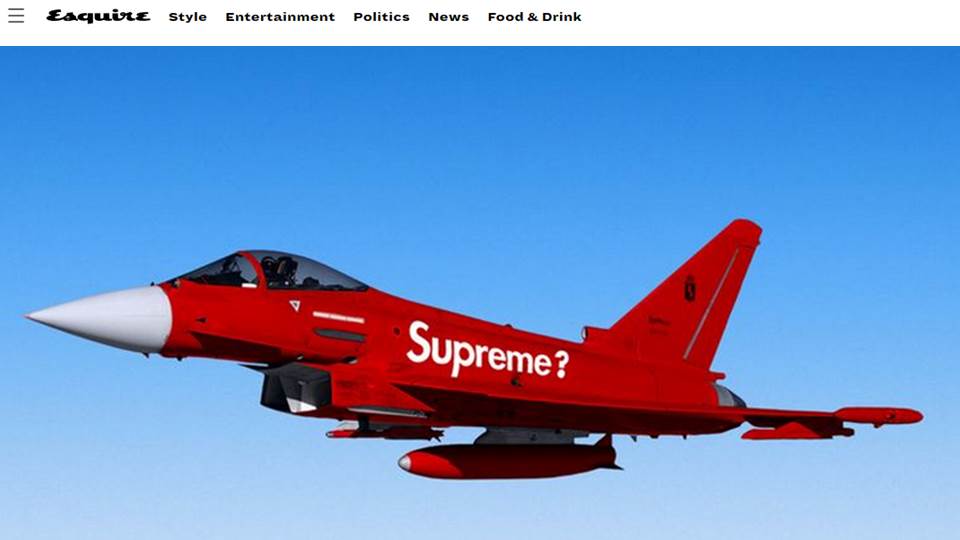
Carlyle invested in Supreme, the epitome of urban skater cool.  Esquire is concerned that Carlyle's past profits from death could rub off on Supreme.


Styles can change in a heartbeat, especially under the direction of a pop-star with millions of fans.  How many appearances does David Rubenstein have in the next week?  Will any enterprising reporters ask for Carlyle to respond to Taylor Swift's request?  Carlyle cool is at risk in a way they've never experienced.

Millions of teens could hate The Carlyle Group overnight.  Their parents will surely hear of Carlyle's cruelty to their favorite musician.  These are the very people Carlyle wants to sell retirement investment products in the coming years.   Carlyle spent decades building its good name.  It might swiftly evaporate.

Update 11-28-19:  NYT reported Carlyle intervened to get the parties to a longer term agreement, one that jumps Carlyle's ROE hurdle.

Update 12-9-19:  Rubenstein told Fox News Maria Bartiromo "In that particular case, I do think there'll be a resolution of that in the near future.  Hopefully, [Swift] can continue to do very good music, but it's something that is more complicated than my being able to resolve it right here."  Rubenstein wants to make Beats like money off of Taylor Swift.

Update 12-15-19:  Swift called out Carlyle in her Billboard Women in Music acceptance speech for Woman of the Decade Award. Swift said that “private equity is what enabled this man, according to his own social media post, that he could ‘buy me,’” before adding, “[I’m] obviously not going willingly.”

Update 6-6-20:  Streetwear retailer Supreme is under fire for its connections to The Carlyle Group, given Carlyle's history in war making and oppressing peaceful protesters.  The article stated "including ownership of Combined Tactical Systems, a company that (as MC suggests) “specializes in the manufacture of military and police equipment such as tear gas canisters, flash grenades, breaching munitions (rubber bullets), and handcuffs.” 

Update 4-12-21:  Swift re-released her Fearless album.  Loyal fans are burying the old versions on Spotify.

Following Friday's midnight release of Fearless (Taylor's Version) — for which Swift re-recorded her music after failing to acquire the rights to her early albums two years ago — Swifties launched a campaign to bury the Big Machine version on Spotify.
Hopefully the unnamed investment firm can claw-back money from Ithaca and The Carlyle Group.  Taylor Swift, like the City of Missoula with Mountain Water, tried many times to buy back the rights to her music.

Tuesday, April 1, 2008

Carlyle's Reputation as Operator Takes Hit


Vought Aircraft, an affiliate of the politically connected Carlyle Group, encountered major problems, enough that Boeing will purchase their part of a joint venture business to get things functioning properly. The maze of contractors and subcontractors bit Boeing in the rear assembly in the production of its 787's. The Dallas Morning News article stated:

Boeing Co. said Friday that is buying Dallas-based Vought Aircraft Industries Inc.'s share of a joint venture that does some sub-assembly on Boeing's new 787 Dreamliner jet.

Vought has had trouble keeping up with Boeing's schedule for construction of the 787, and both firms said the new arrangement should ease those problems.

Recall Vought's shopping around for economic development funds in Texas and South Carolina not terribly long ago? In 2005 Vought had $52.2 million in proceeds from government grants. Another $17.4 million fell in their lap in 2006. Their financial statements show grant monies from South Carolina at $66.7 million and Texas donating $35 million.

Vought will continue to make the aft fuselage section of the plane, but will no longer handle integration of fuselage sections with other parts.

Vought spokeswoman Lynne Warne said “This was purely a financial transaction.”

I think not, Ms. Warne. Vought's major customer in effect fired the Carlyle affiliate for poor performance. A Seattle Times piece provided more information about the problems.

Vought had "been sort of a bottleneck on the production ramp-up and a poor performer in terms of managing to put those sections together at a fast pace," said Peter Arment, an analyst with Greenwich, Conn.-based American Technology Research. "This is part of the program that Boeing thought their suppliers would be able to handle. Their hand was more or less forced, given the performance with this joint venture."

But the first assembled Dreamliner fuselage arrived from South Carolina with much of its internal wiring system not completed, triggering a string of delays that have yet to be overcome.

"This was born of necessity rather than strategy," said aviation analyst Richard Aboulafia of the Teal Group in Fairfax, Virginia. "Boeing didn't do an adequate job of verifying their capabilities."


Vought, you're fired from the integration process! Of course, there's always the spin. This is from the company's president and chief executive officer Elmer Doty:

"This seamless transition of joint venture ownership will build upon the strong foundation already established within Global Aeronautica," he said. "Selling our interest has no impact on our adjacent facility, where the Vought 787 team remains focused on manufacturing composite fuselage sections for this incredible airplane.”

Mr. Doty previously sang a different tune on this project.

Last October, Doty acknowledged that Vought was the highest-risk supplier on the 787 industry team. At the time, Doty attributed Vought's struggles to an internal liquidity crisis in 2006 that prevented the company from ramping up investment in the 787 programme at a sufficient rate. Boeing had previously appointed vice-president Scott Strode to take over management responsibility for Vought's role in the 787 programme.
Carlyle just witnessed the failure of Carlyle Capital Corporation. Adding poor performance in one of its long time subsidiaries doesn't reflect well on the firms ability to run strong operations. That's from a quality, not a financial perspective.

But we've seen Carlyle spin the seemingly unspinnable before. After losing 24 patients in their LifeCare facility in New Orleans, attorneys blamed clinicians first. When that didn't work out, they shifted to pointing the legal finger at Uncle Sam. LifeCare claims their patients became wards of the federal government as soon as FEMA evacuation teams set up in New Orleans.

After failing patients in one of twenty one LifeCare facilities in a time of crisis, Carlyle spun a web of silence. One might expect something this significant to make President Bush's Lessons Learned report. Fran Townsend's tome provides not a word on LifeCare's patient deaths, the largest number of any hospital post Katrina.

The topic never arose last fall as the private equity underwriter (PEU) sought ManorCare with its 500 mostly nursing homes. One might expect past poor performance of a Carlyle health care affiliate to have some bearing on the planned purchase. Congressional hearings avoided the topic. Bush's FTC and Justice Department never got back to me on my concerns. Carlyle's Santa, also known as Uncle Sam, delivered ManorCare just before Christmas last year.

I can only conclude Carlyle is smooth operator but not a quality one. There's ample evidence of both. At least they get to keep that $2.1 million annual management fee from Vought.

Update 1-14-20:  A Boeing Quality Manager recommends family not fly on the 787 due to safety concerns.  He described Boeing's South Carolina operation:  "Over time it got worse and worse. They began to ignore defective parts installed on the planes and basic issues related to aircraft safety."  

Monday, March 11, 2024

New Energy Pathways: Old Related Party Transactions


The Carlyle Group named a new head of energy strategy, Jeff Currie.  Their press release stated:

Carlyle believes the energy transition is entering a new phase amidst the backdrop of significant geopolitical and macroeconomic shifts globally. Decarbonizing our global economy is not a simple linear transition from carbon-intensive energy generation to lower-carbon energy sources. It is a complex, multi-dimensional transition that involves energy production, distribution, transportation, refining, efficiency, and end usage, along with decarbonizing all other sectors of the economy. An effective and orderly energy transition will require new energy pathways – balancing energy availability, security, and affordability, as our energy systems simultaneously decarbonize. Carlyle has a large and diverse global energy platform that invests across the full spectrum of electrons and molecules necessary to develop these new energy pathways.
Marcel van Poecke is Carlyle's Chair of Energy.  That's not his only job.  Marcel founded AtlasInvest in 2007. 
Through its partnership with the Carlyle Group, AtlasInvest also manages the Carlyle International Energy Partners funds. These Carlyle Group funds manage more than $7bn of assets and invest in conventional energy businesses globally (outside of North America).
While not listed as a family office AtlasInvest employs a number of van Poeckes.


SEC filings show Marcel van Poecke as an officer for Regalwood Global Energy.
Regalwood Global Energy Ltd. is an international energy-focused special purpose acquisition company sponsored by an affiliate of Carlyle International Energy Partners, L.P., formed as a Cayman Islands exempted company for the purpose of effecting a merger, share exchange, asset acquisition, share purchase, reorganization or similar business combination with one or more businesses or entities. Regalwood Global Energy Ltd. is led by Marcel Q. H. van Poecke, Chairman of the Board of Directors; Robert Maguire, a member of the Board of Directors; Brooke B. Coburn, President; and Kevin R. Gasque, Chief Financial Officer.
SPAC Regalwood rolled up in late 2019 without making any business combinations.

AtlasInvest and two Poeckes formed Tree Energy Solutions (TES) in 2019.  


Carlyle Energy offered its second renewable and sustainable fund in 2023, hoping to raise up to $2 billion.  It states the fund will use a "private equity value creation approach."  That generally involves nondemocratic means in profit making.

And that brings us back to Marcel van Poecke's first stint with Carlyle.  
1993 - Dutchmen Marcel Van Poecke and Willem Willemstein found Petroplus International B.V. from a management buyout.
2005 - Private equity firms Carlyle and Riverstone Holdings buy Petroplus,
2006 - Petroplus lists company on the Swiss exchange, raising $2.4 billion and making big profits for Carlyle and Riverstone.  Marcel van Poecke resigns from the company.
Carlyle executed a number of PEU moves at Petroplus.  It spun off noncore assets in December 2005:
As part of the new strategy of Petroplus, all the LNG activities of Petroplus will be operated on a stand-alone basis with a management team dedicated entirely to LNG and power in a new entity called "4Gas".
The CEO of 4Gas was none other than Paul van Poecke.  


And who did they spin 4Gas off to?  Their owners, Carlyle/Riverstone.


The holding company of Petroplus sold off "noncore assets" to other entities run by Carlyle/Riverstone.  That hardly seems arms length.  

Petroplus sold one asset to SemGroup LP, a fellow Carlyle/Riverstone affiliate.


Carlyle only controlled 30% of SemGroup.
"We are very excited about the opportunity to work with Carlyle/Riverstone and believe that our partnership will build upon SemGroup's financial and operating success. Carlyle/Riverstone is known as one of the premier private equity players in the energy and power sectors. The transaction will provide SemGroup with a strategic partner that offers a distinct combination of investment and industry professionals who have highly successful track records," Tom Kivisto, SemGroup president and chief executive officer, said.
So what role did the strategic partner play in the sale of Petroplus' noncore assets to another holding of that same strategic partner?  

Private equity underwriters (PEU) revel in leverage, whether they be personal or family relationships, sitting on both sides of the table in deals and driving affiliate business inside the PEU corporate family.
.  
New energy pathways will likely come with Carlyle's same old tricks, deal fees, management fees, debt for dividends and cross selling services within the One Carlyle family.  

Ride up the boom while generating fees, monetize and get out before the bust.  That's the PEU way.

Other interesting facts:

Ironically Petroplus went on to do a joint venture with Blackstone and First Reserve.  Unfortunately, refining margins fell too far to support Petroplus' massive debt and the company declared bankruptcy in 2012.

In 2008 SemGroup declared bankruptcy under Carlyle's 30% ownership due to billions in bad energy bets.  SemGroup's owners sucked $56 million in dividends before the firm imploded.

Update 3-19-24:  Carlyle's Jeff Currie predicts much higher oil prices if the Fed cuts interest rates.

Saturday, April 21, 2012

Carlyle Group's Lawsuits

UNITED STATES SECURITIES AND EXCHANGE COMMISSION
Washington, D.C. 20549


Amendment No. 7
to
Form S-1
REGISTRATION STATEMENT
UNDER
THE SECURITIES ACT OF 1933


The Carlyle Group L.P.
(Exact name of Registrant as specified in its charter)
From time to time we are involved in various legal proceedings, lawsuits and claims incidental to the conduct of our business. Our businesses are also subject to extensive regulation, which may result in regulatory proceedings against us.
In September 2006 and March 2009, we received requests for certain documents and other information from the Antitrust Division of the DOJ in connection with the DOJ’s investigation of alternative asset management firms to determine whether they have engaged in conduct prohibited by U.S. antitrust laws. We have fully cooperated with the DOJ’s investigation. There can be no

170


Table of Contents

assurance as to the direction this inquiry may take in the future or whether it will have an adverse impact on the private equity industry in some unforeseen way.
On February 14, 2008, a private class-action lawsuit challenging “club” bids and other alleged anti-competitive business practices was filed in the U.S. District Court for the District of Massachusetts. (Police and Fire Retirement System of the City of Detroit v. Apollo Global Management, LLC). The complaint alleges, among other things, that certain alternative asset management firms, including Carlyle, violated Section 1 of the Sherman Act by, among other things, forming multi-sponsor consortiums for the purpose of bidding collectively in certain going private transactions, which the plaintiffs allege constitutes a “conspiracy in restraint of trade.” The plaintiffs seek damages as provided for in Section 4 of the Clayton Act and an injunction against such conduct in restraint of trade in the future. While Carlyle believes the lawsuit is without merit and is contesting it vigorously, it is difficult to determine what impact, if any, this litigation (and any future related litigation), together with any increased governmental scrutiny or regulatory initiatives, will have on the private equity industry generally or on Carlyle.
Along with many other companies and individuals in the financial sector, Carlyle and one of our funds, CMP I, are named as defendants in Foy v. Austin Capital, a case filed in June 2009, pending in the State of New Mexico’s First Judicial District Court, County of Santa Fe, which purports to be a qui tam suit on behalf of the State of New Mexico. The suit alleges that investment decisions by New Mexico public investment funds were improperly influenced by campaign contributions and payments to politically connected placement agents. The plaintiffs seek, among other things, actual damages, actual damages for lost income, rescission of the investment transactions described in the complaint and disgorgement of all fees received. In May 2011, the Attorney General of New Mexico moved to dismiss certain defendants including Carlyle and CMP I on the ground that separate civil litigation by the Attorney General is a more effective means to seek recovery for the State from these defendants. The Attorney General has brought two civil actions against certain of those defendants, not including the Carlyle defendants. The Attorney General has stated that its investigation is continuing and it may bring additional civil actions. We are currently unable to anticipate when the litigation will conclude, or what impact the litigation may have on us.
In July 2009, a former shareholder of Carlyle Capital Corporation Limited (“CCC”), claiming to have lost $20.0 million, filed a claim against CCC, Carlyle and certain of our affiliates and one of our officers (Huffington v. TC Group L.L.C. et al.) alleging violations of Massachusetts “blue sky” law provisions and related claims involving material misrepresentations and omissions allegedly made during and after the marketing of CCC. The plaintiff seeks treble damages, interest, expenses and attorney’s fees and to have the subscription agreement deemed null and void and a full refund of the investment. In March 2010, the United States District Court for the District of Massachusetts dismissed the plaintiff’s complaint on the grounds that it should have been filed in Delaware instead of Massachusetts, and the plaintiff subsequently filed a notice of appeal to the United States Court of Appeals for the First Circuit. The plaintiff has lost his appeal to the First Circuit and has filed a new claim in Delaware state court. Defendants are awaiting a ruling on a motion for summary judgment. The defendants are vigorously contesting all claims asserted by the plaintiff.
In November 2009, another CCC investor instituted legal proceedings on similar grounds in Kuwait’s Court of First Instance (National Industries Group v. Carlyle Group) seeking to recover losses incurred in connection with an investment in CCC. In July 2011, the Delaware Court of Chancery issued a decision restraining the plaintiff from proceeding in Kuwait against either Carlyle Investment Management L.L.C. or TC Group, L.L.C., based on the forum selection clause in the plaintiff’s subscription agreement, which provided for exclusive jurisdiction in Delaware courts. In September 2011, the plaintiff reissued its complaint in Kuwait naming CCC only, but, in December 2011, expressed an intent to reissue its complaint joining Carlyle Investment Management L.L.C. as a defendant. We believe these claims are without merit and intend to vigorously contest all such allegations.
The Guernsey liquidators who took control of CCC in March 2008 filed four suits in July 2010 against Carlyle, certain of its affiliates and the former directors of CCC in the Delaware Chancery Court,

171


Table of Contents

the Royal Court of Guernsey, the Superior Court of the District of Columbia and the Supreme Court of New York, New York County, (Carlyle Capital Corporation Limited v. Conway et al.) seeking $1.0 billion in damages. They allege that Carlyle and the CCC board of directors were negligent, grossly negligent or willfully mismanaged the CCC investment program and breached certain fiduciary duties allegedly owed to CCC and its shareholders. The Liquidators further allege (among other things) that the directors and Carlyle put the interests of Carlyle ahead of the interests of CCC and its shareholders and gave priority to preserving and enhancing Carlyle’s reputation and its “brand” over the best interests of CCC. The defendants filed a comprehensive motion to dismiss in Delaware in October 2010. In December 2010, the Liquidators dismissed the complaint in Delaware voluntarily and without prejudice and expressed an intent to proceed against the defendants in Guernsey. Carlyle filed an action in Delaware seeking an injunction against the Liquidators to preclude them from proceeding in Guernsey in violation of a Delaware exclusive jurisdiction clause contained in the investment management agreement. In July 2011, the Royal Court of Guernsey held that the case should be litigated in Delaware pursuant to the exclusive jurisdiction clause. That ruling was appealed by the Liquidators, and in February 2012 was reversed by the Guernsey Court of Appeal, which held that the case should proceed in Guernsey. Carlyle intends to seek review of that ruling pursuant to an application for special leave to the Privy Council. Carlyle will also request a stay of further proceedings, pending consideration of the appeal application, from the Privy Council. Also, in October 2011, the plaintiffs obtained an ex parte anti-anti-suit injunction in Guernsey against Carlyle’s anti-suit claim in Delaware. That ruling has been affirmed by the Guernsey Court of Appeal, although a written judgment has not yet been released. Carlyle anticipates that it will seek a further appeal before the Privy Council on the anti-anti-suit injunction order. The Liquidators’ lawsuits in New York and the District of Columbia were dismissed in December 2011 without prejudice. We believe that regardless of where the claims are litigated they are without merit and we will vigorously contest all allegations. We recognized a loss of $152.3 million in 2008 in connection with the winding up of CCC.
In June 2011, August 2011, and September 2011, three putative shareholder class actions were filed against Carlyle, certain of our affiliates and former directors of CCC alleging that the fund offering materials and various public disclosures were materially misleading or omitted material information. Two of the shareholder class actions, (Phelps v. Stomber, et al.) and (Glaubach v. Carlyle Capital Corporation Limited, et al.), were filed in the United States District Court for the District of Columbia. The most recent shareholder class action (Phelps v. Stomber, et al.) was filed in the Supreme Court of New York, New York County and has subsequently been removed to the United States District Court for the Southern District of New York. The two original D.C. cases were consolidated into one case, under the caption of Phelps v. Stomber, and the Phelps named plaintiffs have been designated “lead plaintiffs” by the Court. The New York case has been transferred to the D.C. federal court and the plaintiffs have requested that it be consolidated with the other two D.C. actions. The defendants have opposed and have moved to dismiss the case as duplicative. The plaintiffs in all three cases seek all compensatory damages sustained as a result of the alleged misrepresentations, costs and expenses, as well as reasonable attorney fees. The defendants have filed a comprehensive motion to dismiss. We believe the claims are without merit and will vigorously contest all claims.
From 2007 to 2009, a Luxembourg portfolio company owned by Carlyle Europe Real Estate Partners, L.P. (CEREP I) received proceeds from the sale of real estate located in Paris, France. CEREP I is a real estate fund not consolidated by us. The relevant French tax authorities have asserted that such portfolio company had a permanent establishment in France, and have issued a tax assessment seeking to collect €97.0 million, consisting of taxes, interest and penalties. We understand that the matter has been referred to the French Ministry of Justice, which may appoint a prosecutor to conduct an investigation.
During 2006, CEREP I completed a reorganization of several Italian portfolio companies. Such Italian portfolio companies subsequently completed the sale of various properties located in Italy. The Italian tax authorities have issued revised income tax audit reports to various subsidiaries of CEREP I. The tax audit reports proposed to disallow deductions of certain capital losses claimed with respect to the reorganization of the Italian portfolio companies. As a result of the disallowance

172


Table of Contents

of such deductions, the audit reports proposed to increase the aggregate amount of Italian income tax and penalties owed by subsidiaries of CEREP I by approximately €50.0 million. It is possible that the Italian Ministry of Justice could appoint a prosecutor to conduct an investigation.
CEREP I and its subsidiaries and portfolio companies are contesting the French tax assessment and also intend to contest the proposed Italian income tax adjustments. Settlement opportunities are also being explored. Although neither CEREP I nor the relevant portfolio companies is consolidated by us, we may determine to advance amounts to such nonconsolidated entities or otherwise incur costs to resolve such matters, in which case we would seek to recover such advance from proceeds of subsequent portfolio dispositions by CEREP I. The amount of any unrecoverable costs that may be incurred by us is not estimable at this time.